South Dakota DBA Strategy in 2026: When a Brand Name Can Differ From the LLC Name
A lot of South Dakota LLC owners assume the public brand and the legal LLC name always have to match, which is why a South Dakota DBA strategy is worth thinking through before any filing moves.
That is not how the state treats the issue.
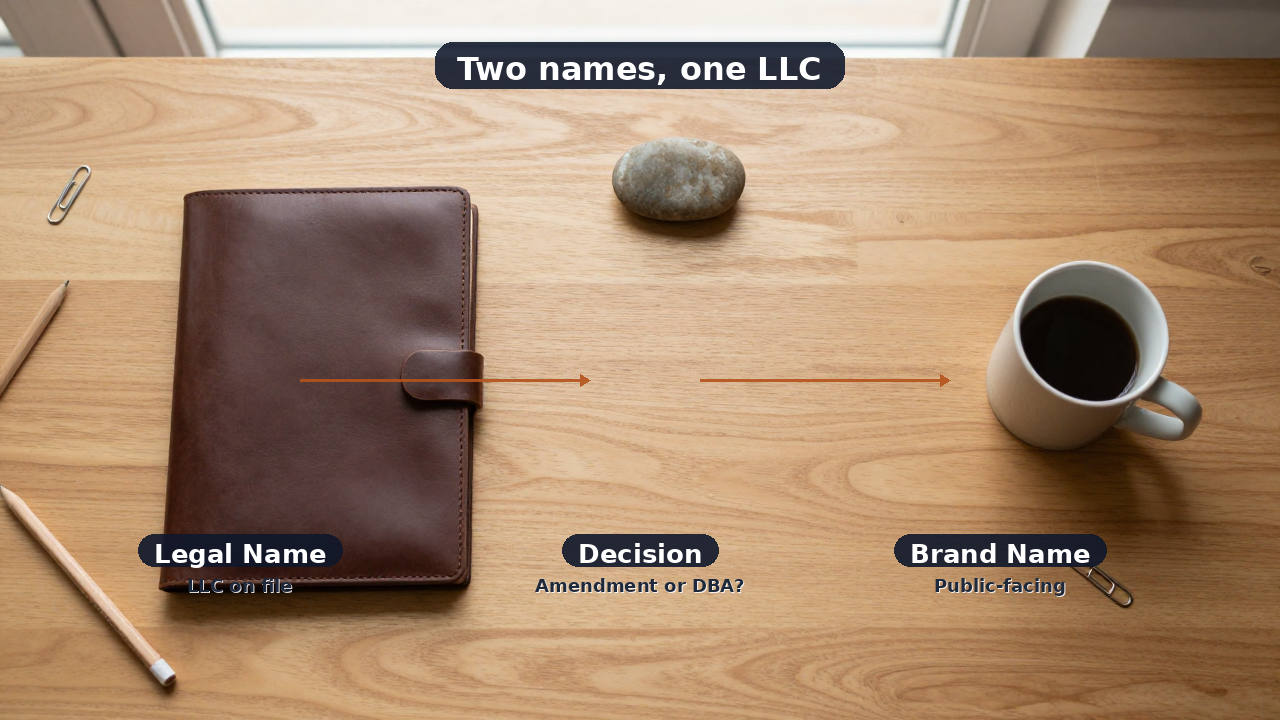
In South Dakota, a business can use a brand name that differs from the LLC’s legal name. But that does not mean every name choice belongs in the LLC formation record. Sometimes the right move is to amend the LLC name. Sometimes the better move is to keep the legal name as-is and register a DBA, which South Dakota calls a fictitious business name.
The real South Dakota DBA strategy question in 2026 is simple: are you changing the legal entity, or are you only changing what customers see?
A South Dakota DBA, also called a fictitious business name, lets an LLC operate under a brand name that differs from its legal name. South Dakota law requires a fictitious name statement unless the business name is already on file with the Secretary of State in a required business filing. No. The South Dakota Secretary of State says DBAs or fictitious business names cannot be used to form or register LLCs, corporations, nonprofits, or partnerships. A DBA supplements the LLC filing; it does not replace it. An LLC amendment is the right move when the legal entity name itself needs to change. South Dakota lists Amended Articles of Organization on its LLC forms page as the filing for a real legal-name change. A South Dakota DBA strategy makes more sense when the LLC wants to keep its legal name but operate under a different public brand, run multiple customer-facing brands under one entity, or test a new concept without rebuilding the legal and banking structure around a new entity name. South Dakota lists a new DBA filing at $10. A DBA registration lasts five years, requires renewal every five years, may require amendment filings if ownership or address information changes, and may be cancelled at no charge. South Dakota law says a noncompliant operator may not maintain legal action or enforce rights arising out of the business until the required fictitious name statement has been filed. The practical risk is that the business can be blocked from enforcing contracts or collecting on disputes until the filing is corrected.Frequently Asked Questions
What does a South Dakota DBA actually do for an LLC?
Can a South Dakota DBA be used to create an LLC?
When is a South Dakota LLC amendment the right move?
When does a South Dakota DBA strategy make more sense than an amendment?
How much does a South Dakota DBA filing cost?
What happens if a South Dakota business operates without a required DBA filing?
Frequently Asked Questions
What a South Dakota DBA actually does
The South Dakota Secretary of State says a DBA or fictitious business name is an assumed name used by a business. The office also says that, under SDCL 37-11-1, a person or entity regularly engaging in business in the state must file a fictitious name statement unless:– the business name plainly shows the true surname of each person interested in the business, or – the business name is already on file with the Secretary of State in a required business filing.That is the core distinction behind a South Dakota DBA strategy.If your LLC is legally organized as Prairie Ridge Holdings LLC, that legal name is already on file with the state. But if you want to market one line of business as Black Hills Cabin Co., that public-facing brand is a different question. In that situation, the issue may be DBA compliance rather than a need to change the LLC’s actual legal name.
What a DBA cannot do
South Dakota is unusually direct on this point. The Secretary of State says DBAs or fictitious business names cannot be used to form or register LLCs, corporations, nonprofits, or partnerships.That matters because some owners try to solve every naming problem with a DBA.A DBA can help you operate under a different public name. It does not create a legal entity. It does not replace Articles of Organization. And it does not convert a sole proprietorship or informal project into an LLC.If you want to see the actual state-facing documents behind an LLC, this related guide is a useful reference: Real Documents You’ll Need for a South Dakota LLC.
When an LLC amendment is the right move
An LLC amendment is the right move when the legal name of the entity itself needs to change.Examples:– You formed as Dakota Field Services LLC and now want the company’s legal name to become Dakota Property Group LLC. – You want the new name to appear as the official entity name on contracts, banking, insurance, tax records, and future Secretary of State filings. – The current name in the Articles of Organization no longer matches how the entity should legally exist going forward.South Dakota’s LLC forms page lists Amended Articles of Organization for domestic LLCs. That is the filing path for a real legal-name change.
When a DBA strategy makes more sense
A South Dakota DBA strategy makes more sense when the LLC wants to keep its legal name, but use a different brand in public.Examples:– One LLC owns several customer-facing brands. – The legal entity name is broad, but a product line or storefront needs a narrower identity. – The company wants a shorter or more marketable name on signage, social media, invoices, or packaging. – The LLC wants to test a new concept without rebuilding the entire legal and banking structure around a new entity name.That is where a DBA can reduce rework.Instead of changing the legal entity name and then updating banks, insurers, contracts, tax records, payroll systems, vendor files, and licensing records, the business can often keep the LLC intact and register the assumed name it actually uses in public.
The practical question to ask first
Before filing anything, ask this:Do we want to change the LLC’s legal name, or only the brand name customers see?If the answer is legal name, look at an amendment.If the answer is brand name, slow down and work through the DBA issue first.That review should include:– website branding, – customer invoices, – payment processors, – tax registrations, – local licenses or permits, – insurance policies, – vendor onboarding records, – bank documentation.In other words, do not treat a branding choice as if it automatically belongs in the LLC formation record.
South Dakota's filing rules make the DBA path pretty clear
The Secretary of State’s DBA guidance is practical and easy to translate into a real operating plan.South Dakota says, on its filing fees page:– a new DBA filing costs $10, – a DBA registration lasts five years, – renewals are required every five years, – amendments are required if ownership interests or certain address information changes, – cancellation is allowed at no charge, – and one person or business may register more than one DBA.That creates a useful compliance framework for LLCs with multiple brands or locations. You do not necessarily need multiple LLCs just because the public names differ. But you do need to keep the fictitious-name filings current where the public brand is not the same as the legal entity name.
Why this becomes a real compliance issue
This is not just a branding formality.South Dakota’s revised business-name law says the fictitious name filing is renewed every fifth year, and it also says a noncompliant operator may not maintain legal action or enforce rights arising out of the business until the required statement has been filed. That means the wrong name strategy can create friction at exactly the moment the business needs to enforce a contract, collect money, or clean up a dispute.The Secretary of State also says its role is strictly ministerial. In other words, the office is not making judgment calls for you about whether your naming setup is smart, protective, or low-risk. The owner has to make that call correctly.
The clean 2026 rule for South Dakota LLCs
For most South Dakota LLCs, the clean rule is:1. Amend the LLC only when the legal entity name itself needs to change. 2. Use a South Dakota DBA strategy when the legal LLC stays the same but the public-facing brand differs. 3. Do not assume a DBA can create or replace an LLC filing. 4. Track the five-year renewal cycle and file amendments if the DBA ownership or address details change.That approach keeps the state record accurate without forcing unnecessary changes across every bank, tax, insurance, and contract system tied to the LLC.If you want the legal LLC side handled cleanly from the start, including a South Dakota registered agent and the correct state-facing setup, start your South Dakota LLC with Rapid Registered Agent.A clean South Dakota DBA strategy is what lets the LLC stay legally stable while the public brand moves with the market.
South Dakota DBA
South Dakota DBA Strategy in 2026: When a Brand Name Can Differ From the LLC Name
South Dakota DBA filings let you operate your LLC under a different business name without forming a new entity. RRA prepares and files your South Dakota DBA, coordinates with the county clerk, and keeps your LLC in good standing so you can rebrand or expand confidently.
Get Started
South Dakota DBA Strategy in 2026: When a Brand Name Can Differ From the LLC Name
Ready to take the next step? Rapid Registered Agent handles the paperwork so you can focus on running your business. Sign up in minutes at the link below.