
South Dakota DBA Strategy in 2026: When a Brand Name Can Differ From the LLC Name
South Dakota DBA Strategy in 2026 is the approach more South Dakota small business owners are using to operate under a brand name that differs from their legal entity name — and it starts with a simple assumed name filing with the state office. If you formed an entity named Black Hills Tech Holdings LLC but want to sell products under the brand name SageBrush Goods, you cannot just start using that name legally without first filing a South Dakota DBA. A DBA — doing business as — lets you conduct business under a brand name that differs from the name on your legal formation documents. The filing does not change your entity structure, your tax classification, or the personal asset protection your business structure provides. What it does do is let you operate, market, and bank under a brand name your customers actually recognize and search for. This guide walks through when you need a South Dakota DBA, how to file one with the Secretary of State, what it costs, how long it lasts, and the strategic reasons small business owners in the state are using them in 2026.
What a South Dakota DBA Actually Is
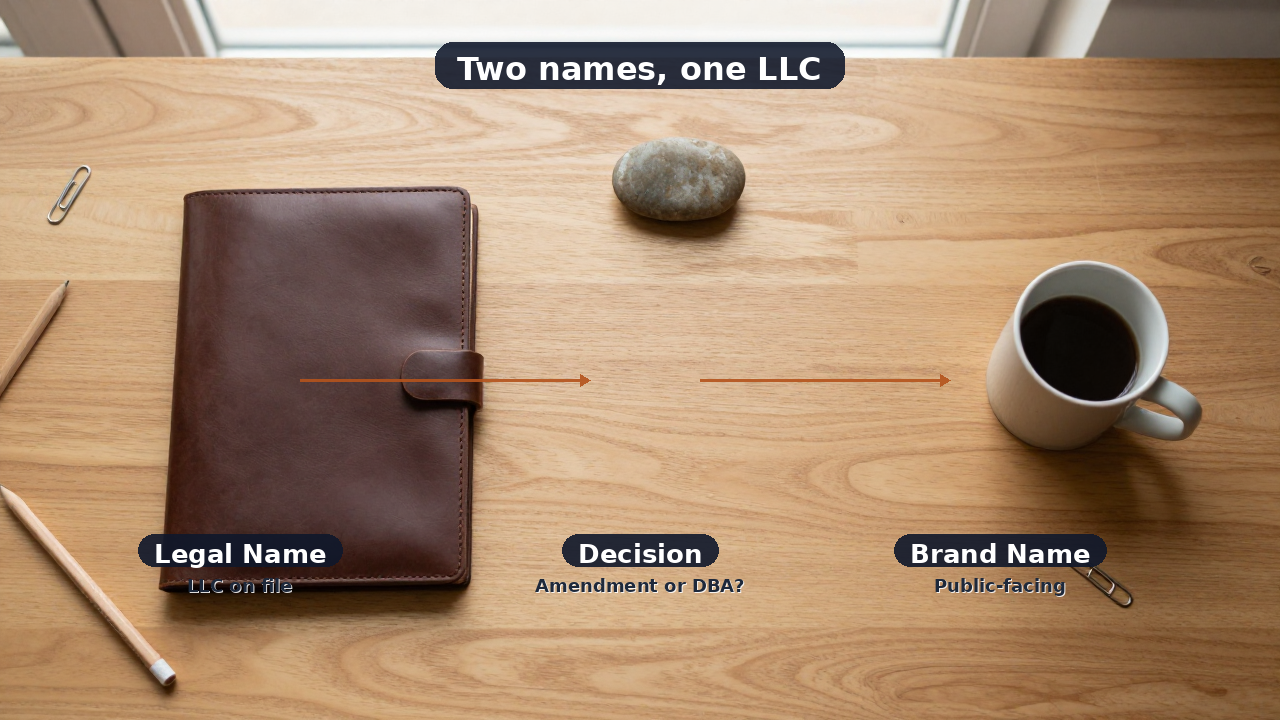
South Dakota calls the DBA filing an assumed name — which is more descriptive than “fictitious name” or “trade name” used in other states. An assumed name is any name under which you conduct business that differs from your legal entity name. If your business entity is named Northern Plains Holdings LLC and you want to run a second business line called Dakota Farm Supply, you file an assumed name for that brand. Your legal entity name stays on the formation documents and your registered agent filings. The assumed name goes on your marketing materials, bank accounts, contracts, and website. South Dakota requires all business entities — LLCs, corporations, limited partnerships, and cooperatives — to file an assumed name if they conduct any business under a name that differs from their legal entity name. Sole proprietors do not need to file a South Dakota DBA unless they want to register a business name, since they are already operating under their personal legal name. The filing tells the public who actually owns and operates the business when the name on the door does not match the name on record with the state. A registered agent service is separate from a DBA filing, but the two work together as part of your overall South Dakota business compliance setup. Your registered agent receives legal documents for your entity — the assumed name filing connects your brand name back to that entity without changing anything about how your registered agent service operates. This layering of entity formation, registered agent service, and assumed name filings gives South Dakota small business owners a clean way to build a brand without cluttering their entity records with marketing names.
When You Actually Need a South Dakota DBA
Most business owners in South Dakota file a DBA when they fall into one of these common situations.
You want a recognizable brand name. Your entity legal name might be structurally required — something like 2026 Holdings LLC or Morningside Properties LLC — and does not reflect the actual business you run. A brand name filing lets you market under Dakota Farm Supply or SageBrush Goods instead. Your customers see a name they can remember and search for. Your entity structure stays the same in the background.
You are adding a second business line or product category. A single entity can operate multiple businesses under different brand names, and each brand name typically needs its own assumed name filing in south dakota. This is common for product lines, service brands, rental property operations, and e-commerce stores. One entity with multiple assumed names handles the legal setup cleanly without the cost of forming separate businesses.
You are rebranding but do not want to amend your entity. Amending your entity legal name requires filing changes with the Secretary of State, updating your operating agreement, and potentially your registered agent paperwork. A South Dakota DBA lets you start using a new brand name immediately without touching your entity documents. If the new brand works, you can amend the entity name later. If it does not take off, you cancel the assumed name filing and your entity legal name is unaffected.
You need a business bank account. Most banks require documentation of your assumed name before opening a business account under a brand name. The bank uses your South Dakota DBA filing to verify that you are authorized to conduct business under that brand name. Without a filed assumed name, the bank cannot open an account in your brand name — even if you have a perfectly valid entity.
How to File a South Dakota DBA Online
The South Dakota Secretary of State offers an online filing portal for assumed name registrations, which makes the process straightforward for most business owners. Here is what the process involves.
First, run a name availability search to confirm no other business is already using your desired brand name. The Secretary of State website has a free business name search tool on the same portal where you file. Search your exact name first, then common variations. If the name is available, move forward. If it is taken, you need a different brand name or you need to work with the existing filer — the state office will not register a name that is too similar to one already on file.
Second, complete the assumed name filing with the Secretary of State. The filing requires your legal entity name, your entity type, the assumed name you want to register, and your registered agent information. If your entity already has a registered agent on file, you typically use the same one for your assumed name — no separate registered agent appointment is needed for the brand name itself.
Third, pay the state filing fee. South Dakota’s assumed name filing fee is modest. Check the current fee on the South Dakota Secretary of State business filing portal before you file, since fees are set by the legislature and can change. The filing is not complete until the fee is paid.
Fourth, save your filed confirmation. You need this document to open a business bank account, sign contracts under your brand name, and prove to any vendor or platform that you are authorized to use your brand name.
After the DBA is filed, you can use the assumed name on your website, social media profiles, packaging, and any platform that requires business name verification.
South Dakota DBA Rules: LLCs vs Sole Proprietors
The rules differ depending on whether you operate as an entity or as a sole proprietor, and understanding the difference matters before you file.
For LLCs in South Dakota, the assumed name filing is mandatory if the entity conducts business under any name other than its exact legal name on the articles of organization. The filing ties the assumed name back to your entity — it does not create a new business or change your liability protection in any way. Your entity liability protection stays intact. Your registered agent continues to receive legal documents for the legal entity name. The brand name filing is purely operational — it lets you do business under a brand while your entity structure handles compliance and asset protection on the back end.
For sole proprietors in South Dakota, a DBA is optional but often useful. A sole proprietor operating under their own legal name does not need to file anything. But if a sole proprietor wants to operate under a business name — Dakota Consulting or Mt. Rushmore Designs — they generally need to file an assumed name to establish that they are the person behind the brand. Without a brand name filing, a sole proprietor using a business name could run into issues with vendors, banks, and landlords who want to verify the legal identity behind the brand. Some banks will open a business account for a sole proprietor under a brand name with just a sole proprietorship schedule and a South Dakota DBA. Others require an entity formation for the same result. For a sole proprietor planning to scale, forming an LLC first and then filing a South Dakota DBA for the brand name gives the cleanest legal structure as the business grows.
How Often You Renew Your South Dakota DBA
One of the most misunderstood aspects of a South Dakota DBA is the renewal requirement. An assumed name filing in south dakota is not permanent unless you stay on top of the renewal schedule. South Dakota requires most entity assumed names to be renewed — typically every five years. Sole proprietorship assumed name requirements vary by county. If your brand name filing lapses and you continue operating under the assumed name, you lose the legal protection the filing provided. Any contract signed, bank account opened, or vendor relationship established under an expired assumed name could be challenged. Set a calendar reminder 60 days before your renewal deadline. The renewal process is the same as the initial filing — log into the Secretary of State portal, find your existing assumed name registration, and file the renewal with the applicable fee. Check your current expiration date by looking up your assumed name registration on the Secretary of State business search tool.
What a South Dakota DBA Does NOT Do
It is important to be clear about what a brand name filing does not give you, because misunderstanding the limits causes problems.
A South Dakota DBA does not give you exclusive use of your brand name. Filing an assumed name tells the public who owns the name — it does not prevent another business from filing the same or a similar name in a different context or as a different entity type. If you need exclusive statewide rights to a brand name, you need a trademark — which is a federal filing with the US Patent and Trademark Office, not a state DBA filing. A South Dakota DBA is also not a business license. Your brand name filing tells the world who owns the business operating under a particular name. It does not give you permission to operate in a specific industry, county, or city. Some business activities require separate licenses — an assumed name does not replace those.
A brand name filing does not change your tax situation. Your entity remains the taxpayer regardless of what brand name you operate under. The IRS does not care what name you use — your entity tax classification and EIN govern your federal taxes. If you have questions about how your business structure affects your taxes, a CPA is the right resource.
A South Dakota DBA does not give your personal assets liability protection. Your entity structure gives you liability protection. The brand name filing is just a name registration. If someone sues your business over something that happened while you were using your brand name, they can still pursue your entity — the DBA does not shield anything. Your registered agent service, your operating agreement, and your business insurance are the actual protective layers. The brand name filing is operational convenience, not a legal shield.
The Strategic Reasons to File a South Dakota DBA in 2026
More business owners in south dakota are treating DBA filings as a strategic brand-building tool, not just a legal checkbox. Here is how smart owners are using assumed name filings in their 2026 strategy.
One entity, multiple brands. A single South Dakota LLC can file multiple assumed names, allowing you to test multiple product lines, service offerings, or e-commerce stores without forming a separate entity for each. The operational simplicity of one business structure with multiple brand names keeps your registered agent fees, annual reports, and compliance calendar manageable. If one brand fails, you cancel the brand name filing and move on — your entity is unaffected.
Faster rebrand without entity paperwork. If your entity legal name no longer fits your business, a DBA lets you start using a new brand name today while you take your time deciding whether to formally amend your formation documents. You can run the new brand, gauge customer response, update your website, and build momentum — all before committing to a legal entity name change. If the rebrand does not stick, you drop the brand name filing and your entity legal name never changed.
Cleaner banking and payment processing. Accepting payments under your entity legal name — which might be something like 2026 Black Hills Ventures LLC — looks unprofessional on an invoice or a customer bank statement. A filed South Dakota DBA gives you a clean, recognizable name on your bank statements and payment processor receipts. When your customers see Dakota Farm Supply instead of 2026 BH Ventures LLC on their bank statement, they know exactly who they paid. This reduces chargebacks, customer confusion, and the awkward explanations that come with payments that do not match your brand.
Protecting a name while you decide. Filing a South Dakota DBA for a potential brand name reserves that name at the state level while you decide whether to commit. This prevents another business from grabbing it while you are in the planning phase. If you decide to move forward with the brand, your assumed name is already filed. If you change your mind, you cancel the brand name filing — no harm done.
What Happens If You Operate Without a Required DBA in South Dakota
If you conduct business under a brand name in south dakota without filing the assumed name registration, the consequences vary but are never good. Vendors and platforms may refuse to work with you if you cannot provide a filed assumed name proving you are authorized to use your brand name. Banks will not open a business account in your brand name without the filed documentation. Contracts signed under an unregistered business name may be harder to enforce, and in some circumstances could be treated as if you were operating under a false business name. If another business has already registered your desired brand name as an assumed name and you use it anyway, you could face trademark infringement issues — their assumed name registration gives them a documented claim to the name. The fix is simple: file first, operate second. The small filing fee and short online process are far less costly than the legal complications of operating under an unregistered brand name.
Frequently Asked Questions
What is a DBA in South Dakota?
A South Dakota DBA — doing business as — is an assumed name filing with the South Dakota Secretary of State that lets you legally operate your LLC or other business entity under a brand name that differs from the legal name on your formation documents. It does not create a new entity or change your liability protection. It registers your brand name and ties it back to your existing legal entity.
Do I need a DBA for my South Dakota LLC?
You need a South Dakota DBA if your LLC conducts business under any name other than its exact legal name on the articles of organization. This includes using a brand name on your website, marketing materials, social media, or any platform that requires business name verification. If your LLC only ever uses its exact legal name, you do not need a DBA. Sole proprietors need a DBA only if they want to operate under a business name different from their personal legal name.
How do I file a South Dakota DBA online?
Go to the South Dakota Secretary of State business filing portal at sos.sd.gov/business, run a name availability search to confirm your desired name is free, complete the assumed name filing with your LLC legal name and registered agent information, pay the state filing fee, and save your filed confirmation. The entire process can be completed in one session if your name search comes back clear and you have your LLC documents ready.
How long does a South Dakota DBA last and does it need to be renewed?
A South Dakota assumed name filing for an entity is typically valid for five years before renewal is required. Check your current expiration date on the Secretary of State business search portal. Sole proprietorship assumed name requirements vary by county. Renew before the expiration date — operating under an expired assumed name creates legal complications with banks, vendors, and contracts.
Does a South Dakota DBA protect my business name?
A South Dakota DBA registers your assumed name and tells the public who owns it, but it does not give you exclusive rights to that name. Another business could potentially file the same name in a different context. If you need exclusive statewide or nationwide rights to your brand name, you need a federal trademark through the US Patent and Trademark Office. A DBA is a name registration, not a trademark.
Can I have multiple DBAs for one South Dakota LLC?
Yes. One South Dakota LLC can file multiple assumed names, one for each distinct brand name or business line it operates. Each assumed name is a separate filing with its own renewal schedule. This is a common strategy for LLCs that run multiple product lines, service brands, or e-commerce stores under a single entity structure.
Related Reading
- South Dakota LLC Formation 2026 — Everything you need to form your South Dakota LLC before you file your first brand name.
- South Dakota Registered Agent Services — Your registered agent is the backbone of your LLC compliance, working alongside every assumed name filing you make.
- Nebraska DBA Strategy in 2026 — How neighboring states handle assumed name filings, and why South Dakota’s rules are worth knowing before you expand.
South Dakota DBA Strategy in 2026 is the simplest way a business owner in south dakota can legally operate under a brand name that customers actually recognize and remember.
South Dakota Registered Agent Services
Need a Registered Agent in South Dakota?
Rapid Registered Agent provides reliable registered agent services for South Dakota LLCs with coverage across Sioux Falls, Rapid City, Aberdeen, and every city in between. Stay compliant across all 50 states with one provider.
- States Covered
- 56
- LLCs Served
- 500,000+
- Annual Reports Filed
- 99.9% On-Time