Vermont LLC Bookkeeping Cleanup in 2026: What to Fix Before Tax Time
Vermont LLC Bookkeeping Cleanup - inline illustration
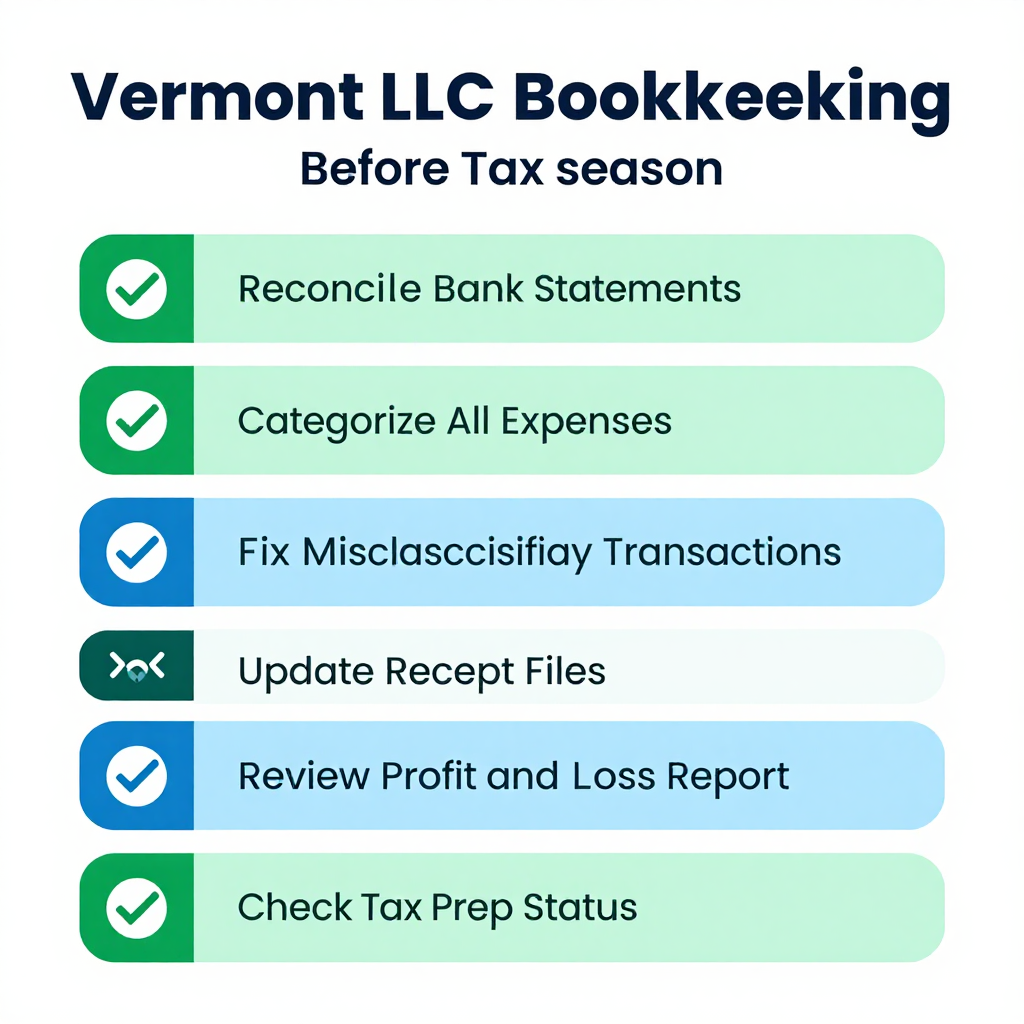
Vermont LLC bookkeeping cleanup in 2026 is the task most owners plan to do in January and never quite finish before March. The receipts are stacked somewhere. The bank transactions from the last quarter are uncategorized. The estimated tax payment went out but was not logged. And somewhere in a folder labeled Tax Stuff are five months of deposits that have not been matched to invoices. This is not a unique situation. It is the most common one. And the reason it matters right now is not about being organized for its own sake. It is math. Clean books before tax season means your return gets done faster, with fewer billable hours from your preparer, and with fewer surprises when the filing is due. Vermont has its own state filing requirements on top of the federal ones. This guide covers what to clean up, what to fix, and what Vermont specifically wants to see from your LLC before the deadline hits.## Why Vermont LLCs Need a Pre-Tax Bookkeeping CleanupVermont LLCs that are pass-through entities — most single-member and multi-member LLCs — report business income on the owner’s personal Vermont return. The numbers on that return come from your bookkeeping. If your bookkeeping is wrong, your state return is wrong. If your bookkeeping is incomplete, your CPA spends hours reconstructing transactions and charges you for every one of them. If your records are missing expenses, you overpay. If your records are missing income, you underpay and face penalties plus interest when Vermont catches the gap.The Vermont Department of Taxes handles business tax administration for the state. The department matches LLC income reports against federal filings and third-party data like 1099s and W-2s. A clean set of books that matches those third-party reports is the strongest defense against a state audit finding. The other reason to start now is time. A cleanup done in January or February gives you room to find errors without the pressure of an April deadline. Catching a missing transaction in February means you can fix it cleanly. Catching it in March means you are either amending a return or filing with an error.## Step One: Collect Every Financial Document for Vermont LLC Bookkeeping CleanupBefore categorizing a single transaction, gather everything. For a Vermont LLC, that means pulling bank statements, credit card statements, any loan documents, receipts for major purchases, invoices sent and paid, and any other financial record that touched the business in 2025. If you used a payment processor like Stripe or PayPal, download the full transaction export for the year. If you have a merchant account, download the statements. If you paid contractors, collect the 1099s you issued or should have issued.The IRS guidelines for small-business record-keeping recommend keeping receipts for all business expenses, bank statements for all accounts, and a log of any assets purchased for the business. The standard retention period is three years from the date of filing, or longer if the IRS audits. Starting the Vermont LLC bookkeeping cleanup by gathering every document in one place is not the exciting part of the process. It is the part that makes every other step faster.## Step Two: Reconcile Bank and Credit Card AccountsReconciliation is the process of matching every transaction on your bank statement to something in your books. For most Vermont LLCs, this means going through each month’s statement and confirming that every deposit and withdrawal is accounted for. This is also where most disorganized books reveal their biggest gaps.Start with the business checking account. Go month by month. For each transaction, confirm the amount, date, and description are in your ledger or bookkeeping software. Flag anything that is missing. Then move to the business credit card. Then move to any savings or money market accounts connected to the LLC. Reconciliation catches duplicate entries, missed transactions, and bank errors that no software catches automatically.If you are using bookkeeping software like QuickBooks or Wave, the reconciliation feature walks you through this month by month. If you are doing this by hand in a spreadsheet, the process takes longer but the steps are the same. The goal is the same either way: every transaction on the statement matches something in your records, and nothing in your records is missing from the statement.## Step Three: Categorize Every Transaction Correctly for Vermont LLC TaxesOnce everything is reconciled, go through the uncategorized transactions and assign each one a category. The categories that matter most for a Vermont LLC on a Schedule C are meals and entertainment, vehicle expenses, home office use, professional services, supplies, and any payments to contractors.Vermont does not have a separate state-level Schedule C, but the income and expense categories flow through to the Vermont personal income tax return. Getting the categories right at this stage means your preparer has less to fix and less to charge you for. It also means the Vermont Department of Taxes sees consistent numbers if your return gets selected for review.One common mistake to avoid: categorizing personal expenses as LLC expenses. If you bought something for personal use with a business account, do not categorize it as a business expense to reduce your tax bill. The Vermont Department of Taxes can disallow those deductions, and the penalties apply on top of the original tax owed. If you are not sure whether something qualifies, flag it for your preparer rather than guessing.For a more detailed breakdown of which account categories to use and how to set them up cleanly, see the guide to small-business chart of accounts setup which walks through the category structure that makes tax time easier.## Step Four: Review Vermont-Specific Deductions and Compliance ItemsVermont offers a few deductions and compliance requirements that are easy to miss if you are not looking for them. One is the Vermont rooms and meals tax. If your LLC reimbursed employees or contractors for meals that were part of business travel within Vermont, those meals may be deductible under the state tax code even if they would not qualify under the federal rules for the same period. Check the Vermont Department of Taxes guidance on meals and rooms tax for the current deductibility rules before filing.Another Vermont-specific item is the Vermont sales tax nexus question. If your LLC sold anything subject to Vermont sales tax in 2025, the sales tax collected needs to be remitted to the state. If you are not sure whether you had nexus — meaning a physical presence or significant economic connection to Vermont that triggers the tax — the Vermont Department of Taxes business tax page has the current rules. Missing this one triggers notices and penalties that are avoidable with a thirty-minute review now.## Step Five: Fix the LLC Records That Cause the Most Tax ProblemsThree categories of records cause the most trouble for Vermont LLC owners at tax time. Fixing them as part of the cleanup is faster and cheaper than dealing with the consequences.The first is missing 1099s. If you paid contractors more than $600 in 2025, you are required to issue a 1099-NEC. If you did not track that or forgot to issue them, the income shows up on your books as paid but the contractor’s income is not corroborated on the official side. The fix is to issue the 1099s now, before your preparer finalizes the return. The IRS 1099-NEC instructions have the current rules and deadlines.The second is commingled personal and business funds. If your personal expenses and business expenses flowed through the same account all year, untangling them takes hours. The cleanup task is to identify every transaction that belongs to the other category and move it to the right place. For the future, the fix is a separate business account from day one of the LLC’s operation.The third is vehicle mileage. If you used a personal vehicle for business purposes, you can deduct either the standard mileage rate or the actual expenses. Vermont follows the federal mileage rules. If you did not log the miles in 2025, you cannot claim the deduction without records. Going forward, log every business trip with the destination, date, and miles driven. That habit takes thirty seconds and saves hours at tax time.For a broader look at what clean records do for a small LLC beyond tax season, see the guide to Wyoming bookkeeping for anonymous LLC owners, which covers why clean books matter for privacy, contracts, and compliance even in years when no tax filing is due.## Step Six: Set Up a Vermont LLC Bookkeeping System That Stops the Shoebox CycleThe cleanup is only half the job. The other half is setting up a simple system that keeps next year’s books clean without requiring a bookkeeper. For a small Vermont LLC with straightforward finances, that system does not need to be complicated.Reconcile the business bank account once a month, on a recurring calendar date. Categorize transactions as they come in rather than letting them pile up. Send invoices the same day the work is completed so income is recorded when it is earned. Set a quarterly reminder to check in on the books — thirty minutes every three months is enough to stay ahead of the mess. It is also the moment to catch errors while the details are still fresh.The biggest change that helps most Vermont LLC owners is separating the business account from the personal account completely. Open a dedicated business checking account. Use it for every LLC transaction, start to finish. When that discipline is in place, the books almost build themselves.For a step-by-step that ties the Vermont compliance calendar to the bookkeeping routine, see the guide to Vermont annual report deadlines for LLCs in 2026, which covers when state filings are due and how to connect those due dates to the bookkeeping schedule.Vermont LLC bookkeeping cleanup in 2026 comes down to this: three to five hours now saves your preparer three to five billable hours at tax time and reduces the chance of an error that triggers a state notice. Gather the documents, reconcile the accounts, fix the categories, and set up a monthly thirty-minute habit that keeps the books clean all year.

Frequently Asked Questions

How do I start a Vermont LLC bookkeeping cleanup if my records are completely disorganized?

Start with the most recent bank statement and work backward. Download all transactions for 2025, match them to receipts, categorize them, and reconcile each month. It takes longer if the records are a mess, but the process is the same. If the gap feels too large to close alone, a CPA or bookkeeper can help prioritize which years and which accounts to tackle first.

What Vermont-specific tax forms does a Vermont LLC need to file?

A Vermont LLC that is a pass-through entity typically files a Schedule K-1 with the owner’s personal Vermont income tax return. If the LLC had employees or paid contractors, it may also need to file Vermont withholding returns. The Vermont Department of Taxes has the current forms and filing deadlines on its website. Clean books make all of this faster to prepare.

Can I deduct meals on my Vermont LLC tax return?

Vermont has its own meals and rooms tax rules that may allow deductions for business meals that do not qualify under the current federal limits. Check the Vermont Department of Taxes guidance for the current rules. In general, meals that are ordinary and necessary business expenses for your Vermont LLC are deductible on the state return even if the federal rules have changed.

What happens if I missed issuing 1099s for contractors I paid in 2025?

If you paid a contractor more than $600 and did not issue a 1099-NEC, the IRS may disallow the deduction and assess tax on the unreported income. You can still issue the 1099 now and file it late, which resolves the documentation gap even if penalties apply. The IRS 1099-NEC instructions cover the current requirements and correction procedures.

Should I use bookkeeping software or hire someone for my Vermont LLC?

For most small Vermont LLCs with uncomplicated finances, bookkeeping software like QuickBooks or Wave is sufficient and costs less than a bookkeeper. The key is using it consistently — thirty minutes a month keeps the books clean enough to produce a tax return without surprises. If your LLC has multiple members, significant assets, or a complicated revenue structure, a CPA for the tax prep and a part-time bookkeeper for the month-to-month records is worth the cost.

How does a Vermont annual report affect my bookkeeping?

The Vermont annual report is a separate filing from your tax return that confirms the LLC’s registered agent, principal office address, and member information with the Secretary of State. The annual report due date depends on the LLC’s filing anniversary, and the Vermont LLC bookkeeping cleanup process makes tracking that date automatic. Clean books mean the annual report information is already organized and ready to file when the deadline arrives.

Vermont LLC Bookkeeping

Clean Vermont LLC Books Before Tax Time Without Hiring a Bookkeeper

Vermont LLC bookkeeping cleanup in 2026 catches the errors, fixes the categories, and sets up the simple system that keeps your books clean all year. Rapid Registered Agent handles your Vermont compliance filings so your records stay current and ready when the deadline hits.

Tax Prep Hours Saved
3-5 Per Return
Errors Caught Before Filing
1-3 Typical
Annual Report Tracking
Built Into Compliance
Back To Top