
Oregon LLC Cleanup Books in 2026: How Owners Untangle Mixed Personal Spending
Oregon LLC Cleanup Books in 2026 starts with an uncomfortable question. Did you swipe the business card for groceries. Did a client payment hit your personal checking account. Did your phone bill get split between business and personal with no note at all. That mess is common. It is also fixable. The goal is not perfection. The goal is a clean trail that makes tax time, annual filings, and owner decisions easier.
Oregon LLC Cleanup Books in 2026 Starts With Finding Every Mixed Transaction
Most owners do not wake up and decide to mix personal and business spending. It usually happens in a rush. The business card is already in the wallet. The personal card is maxed for the week. The client is paying fast and the wrong bank account is the only one on the invoice. One bad month turns into six. Then tax time shows up and nobody can tell what the numbers mean.
Mixed spending creates three separate problems. First, deductions get weaker because the support is sloppy. Second, owner draws and real business expenses get mashed together, which makes profit look wrong. Third, estimated tax planning gets worse because the books cannot tell you what the business actually earned. That means more guessing and more cleanup later.
The IRS recordkeeping guidance explains why good records matter. Records help separate business from nonbusiness activity. They support deductions. They also make returns easier to prepare. That matters when an Oregon LLC owner is trying to untangle six months of mixed card swipes in one weekend.
The First Oregon LLC Cleanup Books in 2026 Pass Is Just Sorting, Not Judging
Do not start by trying to fix everything at once. Start by sorting. Pull every transaction from every account that touched the business. That means business checking. Business credit cards. Personal accounts that accidentally paid business expenses. Payment processors like Stripe or PayPal. Loan accounts if the LLC used them.
Create three buckets. Bucket one is clearly business. Bucket two is clearly personal. Bucket three is not clear yet. That third bucket matters because it keeps you from forcing a bad answer too early. When owners rush, they often code gray-area spending as business just to move on. That is how weak deductions stay in the file.
A simple example helps. Say an owner in Eugene pays Adobe, fuel, a restaurant tab, office paper, and a family streaming subscription from the same business card in one week. Adobe is likely business. Office paper is likely business. The streaming subscription is likely personal. Fuel may be business, personal, or mixed depending on mileage records. The restaurant tab may be deductible, partly deductible, or not deductible at all depending on what happened and what records exist. Sorting first keeps the cleanup honest.
The IRS deductible business expenses page is useful here. It stresses that expenses must be ordinary and necessary. That standard is simple. If the spending does not clearly serve the business, do not rush to treat it like a business deduction. That protects the file later.
How Owners Reclassify Personal Charges Without Breaking the Audit Trail
One of the worst cleanup habits is deletion. Owners get embarrassed by the mixed spending and start deleting transactions from the books. That feels cleaner in the moment. It actually makes the record worse. A missing transaction raises more questions than a corrected one.
The better move is reclassification. If the LLC paid a personal expense, code it as an owner draw, member distribution, or shareholder distribution based on the tax setup. If the owner paid a real business expense from a personal account, record it as an owner contribution or reimbursement due. That shows what happened without pretending it never happened.
Think about a Salem owner who paid a business software renewal from a personal credit card because the business card had fraud protection turned on for three days. That is not a personal expense. It is a business expense paid personally. The cleanup entry should show the expense plus the owner-funded amount. Now the books tell the truth.
Think about the opposite case. A Portland owner uses the business debit card for a weekend hotel that was purely personal. Do not hide it in travel. Reclassify it as an owner draw. That correction protects the business expense categories from turning into fiction.
Oregon Taxes Get Harder When Mixed Spending Hides Real Profit
Oregon owners often notice the cleanup problem when estimated taxes are due. That makes sense. Estimated payments depend on a usable profit number. When spending is mixed, profit is either overstated or understated. Both hurt.
The Oregon Department of Revenue personal income tax page says many taxpayers must make estimated payments when they expect enough tax due. For many single-member LLC owners taxed on the personal return, that means the bookkeeping file needs to show real net income during the year. If personal charges were buried as business expenses, estimated payments may be too low. If real business expenses were never recorded because they were paid personally, estimated payments may be too high. Neither outcome helps cash flow.
The same logic matters for Oregon’s Corporate Activity Tax page. Not every small LLC owes CAT. But owners near the threshold need clean gross receipts and clean subtraction records. A messy file makes planning harder than it needs to be. Even when CAT does not apply, disciplined books help the owner know when growth is moving into a different tax picture. This is where cleanup stops feeling like clerical work. It becomes planning. Clean books show whether the owner can take cash out. Clean books show whether pricing needs to move. Clean books show whether tax reserves are too low. That gives the owner better control.
The Fastest Way to Untangle Oregon LLC Mixed Spending Month by Month
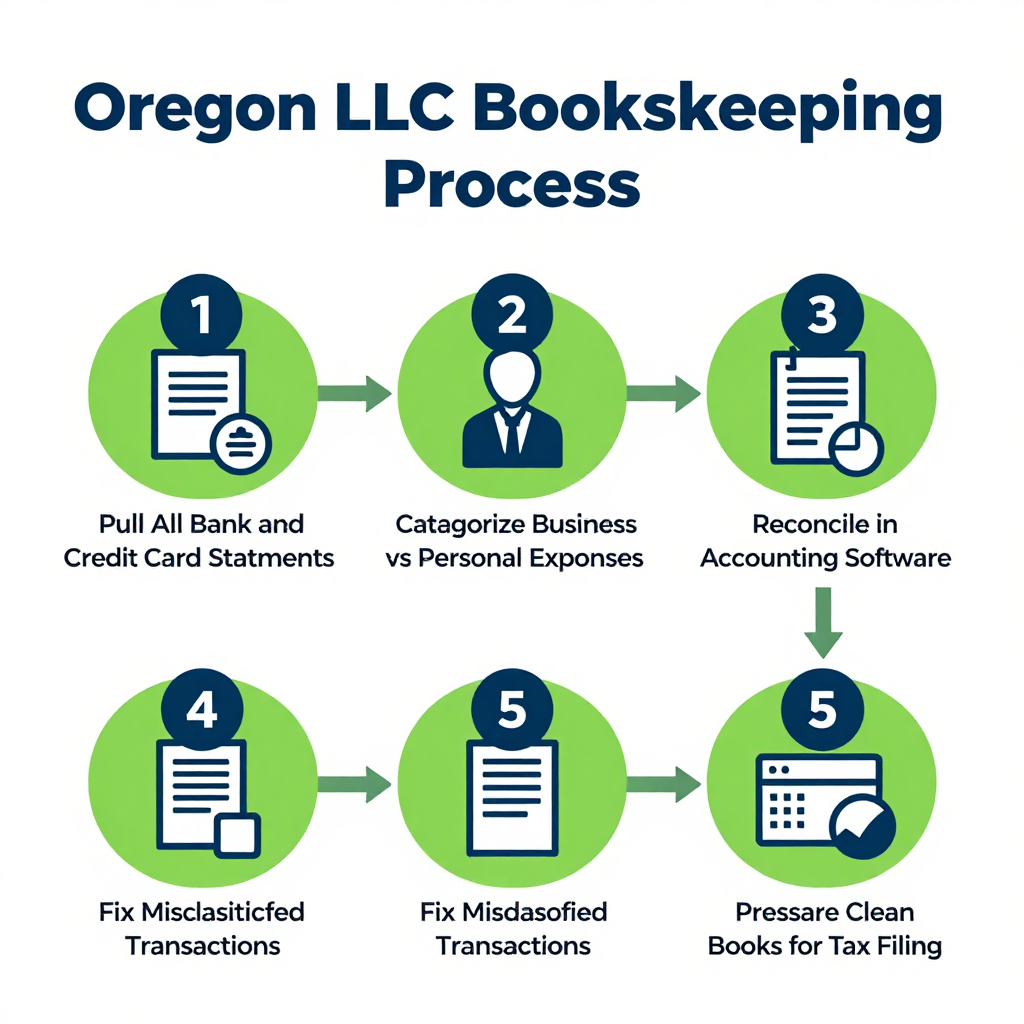
Do not attack the full year as one pile. Go month by month. Open the bank statement. Open the credit card statement. Match every line to the bookkeeping file. If a line is missing, add it. If a line is in the wrong category, fix it. If a line is personal, reclassify it. Then move to the next month.
This approach works because statements create natural boundaries. They also create a visible finish line. Owners who try to clean up the full year from the ledger screen alone usually stall out. Owners who finish one month at a time actually get momentum.
Here is a practical sequence. Start with income deposits first. Make sure every client payment lands in the right month. Next, handle subscriptions and recurring software because they are easy wins. Then do large transfers between owner and business accounts. After that, tackle small card charges, meals, fuel, and online purchases. Finish with anything in the uncategorized or ask-my-accountant bucket.
The IRS business recordkeeping page supports this approach because it emphasizes keeping records that clearly show income and expenses. That is exactly what monthly reconciliation creates. Each month becomes readable. Readable books are easier to defend and easier to use.
Home Office, Mileage, and Shared Bills Are Where Oregon LLC Cleanup Books in 2026 Usually Break Down
Most cleanup projects do not fail on rent or software. They fail on mixed-use items. That means home internet. Cell phones. Cars. Home office costs. Utilities. Those categories are messy because the spending is real but only part of it belongs to the business.
The IRS home office deduction page matters here. It gives the owner a framework for business use of the home. That does not mean every home bill becomes fully deductible. It means the owner needs a method. Square footage. Regular use. Exclusive use where required. Something defensible.
Cell phones need the same discipline. If the owner uses one phone for both life and work, the cleanup needs a business-use percentage. Internet bills too. Not perfect. Just reasonable and consistent. The point is to stop throwing the full household bill into the books with no note.
Mileage is another trap. If the owner paid fuel from the business card for both personal driving and client trips, the books need support. Without a log, fuel coded straight to auto expense becomes weak. The better cleanup move is to review actual records, reclassify unsupported personal use, and set a cleaner tracking rule going forward. These are the spots where owners often say, “I know some of it was business.” That may be true. But the books need more than memory. They need a method. That is what turns a messy category into a usable one.
Oregon Annual Reports Get Easier When the Books Stop Fighting the Records
The Oregon Secretary of State business registry page is not a bookkeeping guide. But it still matters to the cleanup process. The annual report, entity information, and public business record all work better when the owner has a clean internal file. A messy bookkeeping system usually travels with a messy document system. Wrong addresses. Old member names. Stale contact details. That kind of sloppiness tends to cluster.
When the books are clean, the owner usually has a better handle on owner draws, reimbursements, business bank accounts, and the actual structure of the LLC. That makes annual compliance easier. For a direct walk-through on the state filing side, see the Oregon Annual Report Filing for LLCs: 2026 Checklist and Fees. For the bigger document picture around formation and internal paperwork, see Real Documents You’ll Need for an Oregon LLC. Those two pages pair well with the bookkeeping cleanup because they help the owner keep the records system aligned.
The Habits That Stop Mixed Personal Spending From Coming Back
Cleanup only matters if the mess does not restart next month. That means the fix needs operating rules.
Use one business checking account. Use one business card. Pay owner personal spending from personal accounts only. If the owner must cover a business expense personally, note it the same day. If the business must cover something personal by mistake, reclassify it before month-end.
Set a monthly bookkeeping date. Not “when there is time.” A real date. Same week every month. Same process every month. Review income. Review expenses. Review uncategorized charges. Review transfers. Review owner draws. That routine prevents the pileup.
A small story makes the point. An owner in Bend may spend two hours cleaning nine months of mixed charges in September. After that, the ongoing habit might only take twenty minutes a month. That is the whole game. Big pain once. Small maintenance after. That trade is worth it because Oregon LLC Cleanup Books in 2026 works best when the cleanup becomes a habit instead of a rescue mission.
Frequently Asked Questions
What is the first step in an Oregon LLC cleanup books project?
The first step is pulling every transaction from every account that touched the business and sorting each one into business, personal, or unclear. That gives the owner a real map of the problem and keeps the cleanup honest.
Should I delete personal expenses from the business ledger?
No. Reclassify them instead. Deleting entries weakens the audit trail, while reclassification shows what happened and how it was corrected.
What if I paid real business expenses from my personal account?
Record those costs as business expenses paired with an owner contribution or reimbursement due. That keeps the books accurate without pretending the payment came from the business account.
How do mixed personal charges affect Oregon estimated taxes?
They distort profit. That can make quarterly estimates too high or too low, which hurts cash flow and may create penalties or surprise balances later.
Do home office and shared phone bills belong in the cleanup?
Yes. They are some of the most common mixed-use categories. The cleanup should apply a reasonable business-use method instead of throwing the whole bill into the books with no support.
What keeps mixed spending from coming back after cleanup?
One business card, one business bank account, monthly reconciliation, and same-day notes on any owner-paid business expense stop the cycle from starting again. That is how Oregon LLC Cleanup Books in 2026 protects the file before tax time.
Oregon LLC Bookkeeping
Untangle Mixed Spending Before Oregon Tax Time Gets Expensive
Oregon LLC Cleanup Books in 2026 means separating personal charges, reclassifying owner spending correctly, and building a monthly system that keeps the books clean. Rapid Registered Agent helps Oregon LLC owners keep the compliance side organized so the numbers stay usable year-round.
- Monthly Cleanup Habit
- 20 Minutes
- Mixed Charges Corrected
- Month by Month
- Annual Filing Stress
- Lower