
Arizona Estimate Follow-Up in 2026: How Service Businesses Turn More Calls Into Signed Jobs
Arizona Estimate Follow-Up in 2026 is where service businesses win or lose the job. You spent time writing the estimate. You sent it. Then what? If you are like most Arizona contractors, you sent it and hoped. That is not a strategy. That is a wish.
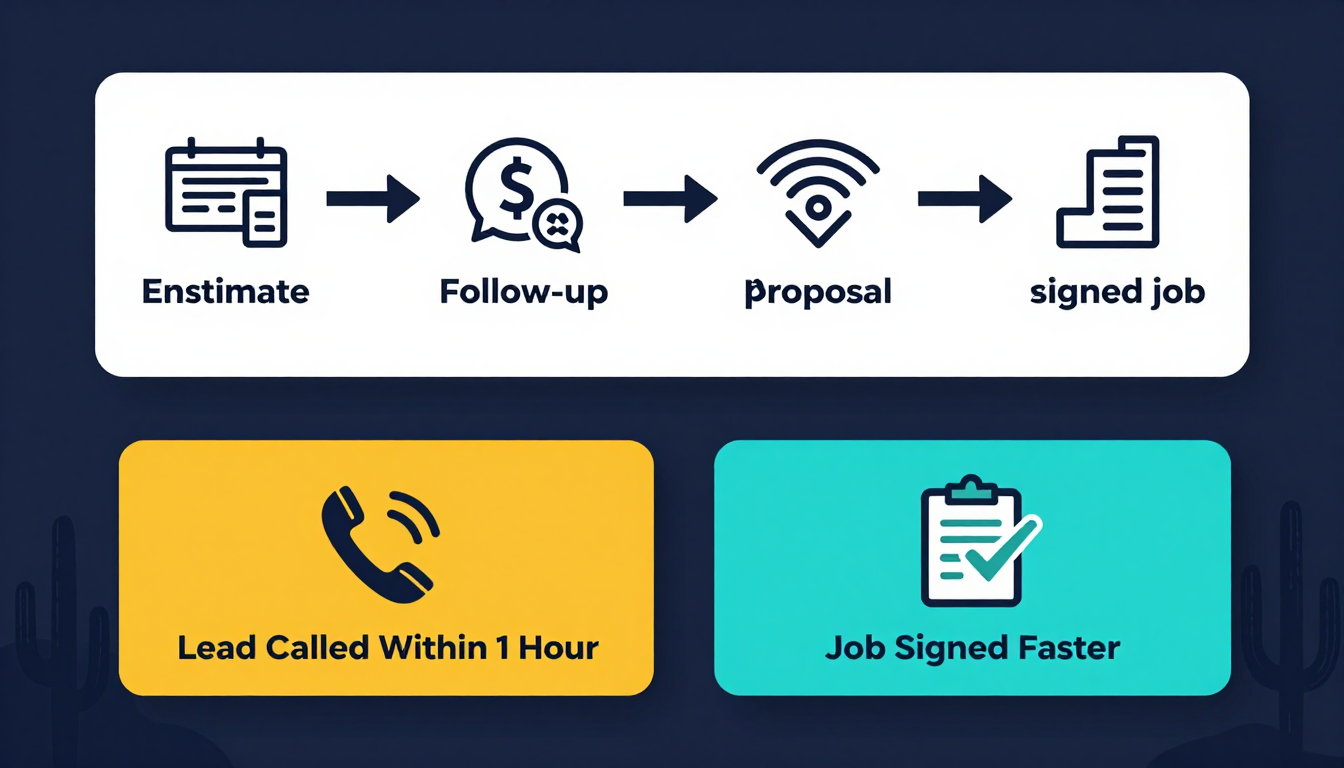
The businesses that consistently turn estimates into signed contracts follow up. They follow up with purpose. They follow up on a system. In 2026, that system can be simple, fast, and built around the way your customers actually make decisions.
Why Estimates Go Cold in Arizona
Your Arizona customer is busy. They called three contractors. They got three estimates. One of them texted back the same day. One sent an email and left it at that. One called three days later to “check in.” The customer signed with the one who made it easy and made it personal.
Silence after an estimate is not a “no.” It is a pause. Most customers mean to respond. Life just got in the way. A quick, friendly follow-up cuts through that noise and reminds them you are the obvious choice.
The Arizona Registrar of Contractors holds licensed contractors to high standards. That professionalism should extend to how you communicate after the estimate. Customers notice the difference between a contractor who disappears and one who follows through.
The Three-Day Rule for Estimate Follow-Up
The best time to follow up is within three business days of sending an estimate. At that point, the customer has had time to look it over but has not yet made a decision. A follow-up at this window catches them while the project is still fresh.
Your follow-up does not need to be long. A short message works best. Reference the job by name. Ask if they have questions. Make it easy to reply. If they do not answer, follow up again in five business days. Two touches within two weeks is the sweet spot for most service businesses.
Three touches is the industry standard before you move on. After three genuine attempts, the customer is either not interested or too disorganized to make a decision. Neither is a good fit for your schedule.
What to Say When You Follow Up
Arizona service business owners worry about sounding pushy. Here is the truth: a helpful follow-up is not pushy. It is professional. Your customer asked you for an estimate because they want to hire someone. You are just making it easy for them to say yes.
Try this for your first follow-up: “Hi [Name], I wanted to make sure you received the estimate for [Project]. Do you have any questions about what I included? I am happy to walk through it with you if that helps.”
That is it. No pressure. No begging. Just a clear, helpful offer.
If they do not reply, try this for your second follow-up: “Hi [Name], I have not heard back and I wanted to check in. If the timing is not right, I totally understand. If you have any questions or want to talk through options, I am here.”
The third follow-up can be shorter: “Hi [Name], just circling back on the estimate I sent last week. I have availability opening up on [Date] if you want to lock that in. Happy to answer any questions.”
Turning Estimate Follow-Up Into a System
Following up once is not a system. A system means every estimate gets a follow-up sequence, every time, without relying on memory. Here is how to build it.
First, track every estimate you send in a simple log. Record the customer name, the project, the date you sent it, and the follow-up dates. A shared spreadsheet works fine. Something is better than nothing.
Second, use your phone or CRM to set reminders. When you send an estimate, immediately set a follow-up reminder for three business days later. That way it never slips through the cracks.
Third, keep a short set of follow-up templates ready. You do not want to write every message from scratch. Adjust the name, the project, and the timing. Keep the tone warm and helpful.
How AI Voice Notes Help You Follow Up Faster
Arizona service businesses in 2026 have a new advantage. AI voice notes let you record a follow-up message in seconds. Instead of typing out a text or email, you speak it. The AI turns your voice into a clean, professional message you can send right away.
This matters because most follow-up messages fail because the window closes before you send them. You get busy on a job. You plan to follow up later. Later never comes. AI voice notes make it fast enough to do between jobs.
Link your follow-up system to your registered agent service so that every business communication stays organized and your business stays compliant with Arizona record-keeping requirements.
Real Example: A Mesa HVAC Company Closes 30% More Jobs
Jose runs an HVAC repair business in Mesa. He used to send estimates and wait. His close rate was about one in three. After he started a simple follow-up system, his close rate jumped to nearly one in two.
His system: send the estimate, set a three-day reminder, send a text follow-up, set a five-day reminder, send a second text. Three touches total. He used templates. He tracked everything in a shared spreadsheet his wife could see too.
The key was consistency. He did not follow up some days and forget others. Every estimate got the same sequence. Over six months, his revenue went up without him taking on more calls. He just closed more of the ones he already had.
Common Estimate Follow-Up Mistakes
Arizona service businesses make a few mistakes that hurt their close rate. Here is what to avoid.
Waiting too long. If you do not follow up within a week of sending the estimate, the customer has already made a decision or lost interest. Three days is the target.
Being too aggressive. Do not call every day. Do not send multiple messages in one day. Keep it respectful and professional. Two to three touches over two weeks is plenty.
Forgetting to answer questions. Sometimes a customer replies with a question and you do not answer fast enough. Set an alert for every reply. Respond within a few hours during business hours.
Not leaving a clear next step. Your follow-up should always make it easy for the customer to say yes. Include availability, pricing context, or a gentle nudge toward a decision. Give them a reason to reply.
Frequently Asked Questions
How soon should I follow up after sending an estimate in Arizona?
Follow up within three business days of sending the estimate. This catches the customer while the project is still fresh in their mind.
How many times should I follow up on an estimate?
Three touches over two weeks is the standard sweet spot. After three genuine attempts, move on unless the customer responds.
What should I say when following up on an estimate?
Keep it short and helpful. Reference the project by name, ask if they have questions, and make it easy to reply. Never be pushy or demanding.
Does following up on estimates actually work?
Yes. Most customers do not respond to the first message. A simple follow-up sequence can double or triple your close rate.
Can AI help with estimate follow-up?
Yes. AI voice notes let you record professional follow-up messages in seconds between jobs. This makes it easier to stay consistent without slowing down your day.
- Arizona Compliance News in 2026 — Stay on top of Arizona contracting requirements
- Arizona AI Voice Notes in 2026 — How Arizona contractors use AI to save time
- Arizona Multi-Member LLC Money Rules in 2026 — Managing money and approvals in your Arizona LLC
Aggressive Representation. Proven Results.
Close More Jobs with a Simple Estimate Follow-Up System
Arizona service businesses that follow up consistently win more contracts. Rapid Registered Agent helps you stay organized so you never miss a follow-up again.
- Arizona Contractors Served
- Thousands
- Follow-Up Systems
- Built Into Your Workflow
- Support
- Arizona-Based Team