Delaware Holding Companies in 2026: Using AI to Flag Compliance Mail Before Deadlines Slip
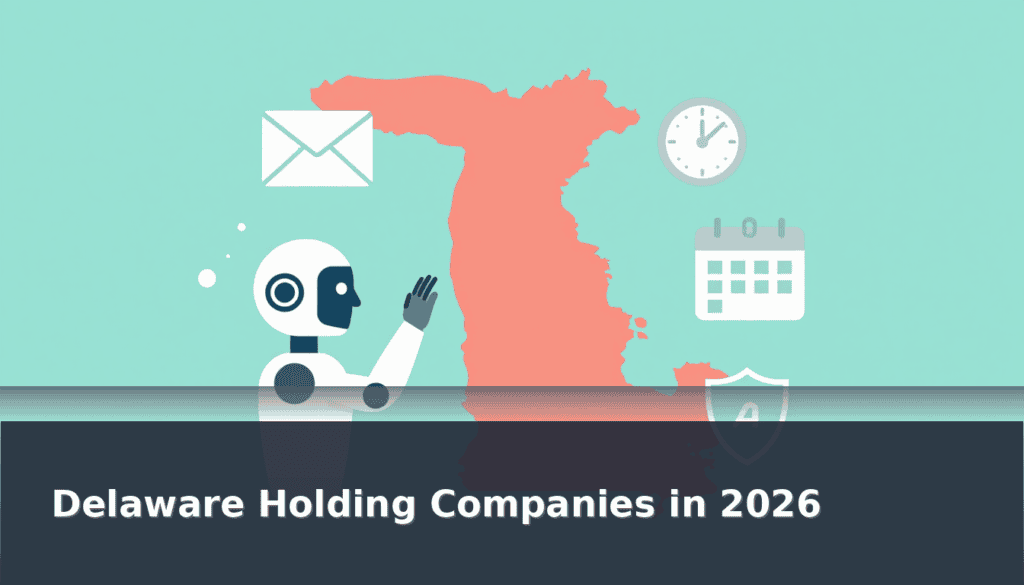
Delaware holding companies in 2026 face a compliance mail problem that grows with every state they add. An artificial intelligence company that specializes in compliance mail can help these entities sort, classify, and flag notices before deadlines pass. The Delaware state corporate records system requires every registered entity to maintain an active registered agent, and the state of Delaware sends compliance notices to that agent throughout the year. The state of Delaware’s corporate governance obligations require every entity to maintain a registered agent and stay current on annual reports and franchise tax filings. The state of Delaware’s registered agent requirement means the state’s official records need to stay accurate as the portfolio changes. Each entity in the portfolio has its own registered agent, its own state filing calendar, and its own version of urgent. One holding company with a limited liability structure across multiple states can accumulate compliance deadlines that multiply faster than any single person can track. Many companies in this position treat Delaware as the legal home for the parent structure while operating subsidiaries in other states, and that is exactly the structure where compliance mail slips happen most often. Mail arrives at different registered offices on different schedules. Deadlines pile up in different months. A missed biennial report in one state, an annual registration in another, a franchise tax notice in a third — each one missed quietly until it is not quiet anymore. The missed deadlines that hurt most are not the ones that felt urgent. They are the ones that slipped through without anyone noticing until the suspension notice arrived.
This article walks through how Delaware holding companies in 2026 can use generative AI and artificial intelligence to sort compliance mail by urgency, flag deadlines before they pass, and keep every entity in the portfolio in good standing without relying on a shared inbox that no one owns.
Why Delaware Holding Companies Miss Compliance Deadlines
Delaware holding companies usually manage multiple entities across multiple states. Each entity has its own registered agent address, its own state compliance calendar, and its own set of filing windows that do not align with any of the others. A Texas LLC holding a commercial property in Arizona might have its Arizona biennial report due in March. The Delaware parent entity has its own annual report and franchise tax due in June. A Nevada subsidiary has an annual list filing in a completely different month.
The compliance mail for all three flows into the same handful of inboxes. When the person who usually handles it is out, or when the volume spikes, the mail that gets handled first is the mail that looks most urgent — not the mail that is most deadline-critical. Many companies only notice the problem once a registered agent change confirmation sits unopened for months and a vendor can no longer verify the entity is in good standing. The biennial report reminder from Arizona sits in an inbox until the day before the deadline because it did not look like a crisis when it arrived. By then, the filing is already late.
The fix is not a better inbox. The fix is a system that reads the mail, extracts the deadline, and flags it before the inbox becomes the bottleneck. For Delaware holding companies, the underlying idea is to create a single source of truth for who owns each entity’s compliance calendar, who reviews each deadline flag, and how the system escalates when the flag is not acted on inside the window.
A holding company structure exists primarily to give the owner or parent company the ability to own assets, hold contracts, and limit liability across multiple businesses through a separate legal identity. When the structure is set up with no dedicated compliance staff, the search of a problem the team typically runs into is not entity formation — it is entity maintenance. State-by-state deadline tracking across a multi-entity portfolio becomes a part-time job nobody signed up for.
What a Holding Company Structure Looks Like and Why It Matters for Compliance Mail
Delaware is the legal home for the parent in roughly two-thirds of all U.S. holding company structures, and that decision shapes the compliance mail that flows into the registered agent inbox. A typical structure has a Delaware LLC or C-corp parent at the top, with operating subsidiaries formed in the states where the business actually operates. The parent has its own annual report and franchise tax in Delaware. Each subsidiary has its own annual report, biennial report, and franchise tax in its home state. Some states also require periodic filings on entities that hold real property, have employees, or are registered to transact business in that state.
The reason most teams run into trouble is that each of those filings has its own due date, its own form, and its own penalty for missing it. When the due dates are tracked by hand across multiple spreadsheets and inboxes, the parent and the subsidiaries drift apart on attention. The owner or parent company sees one set of obligations. The subsidiaries each see their own. Nobody sees all of them at once. That is the structure that compliance mail automation exists to solve.
Delaware AI Governance and 2026 Compliance Mail Risk
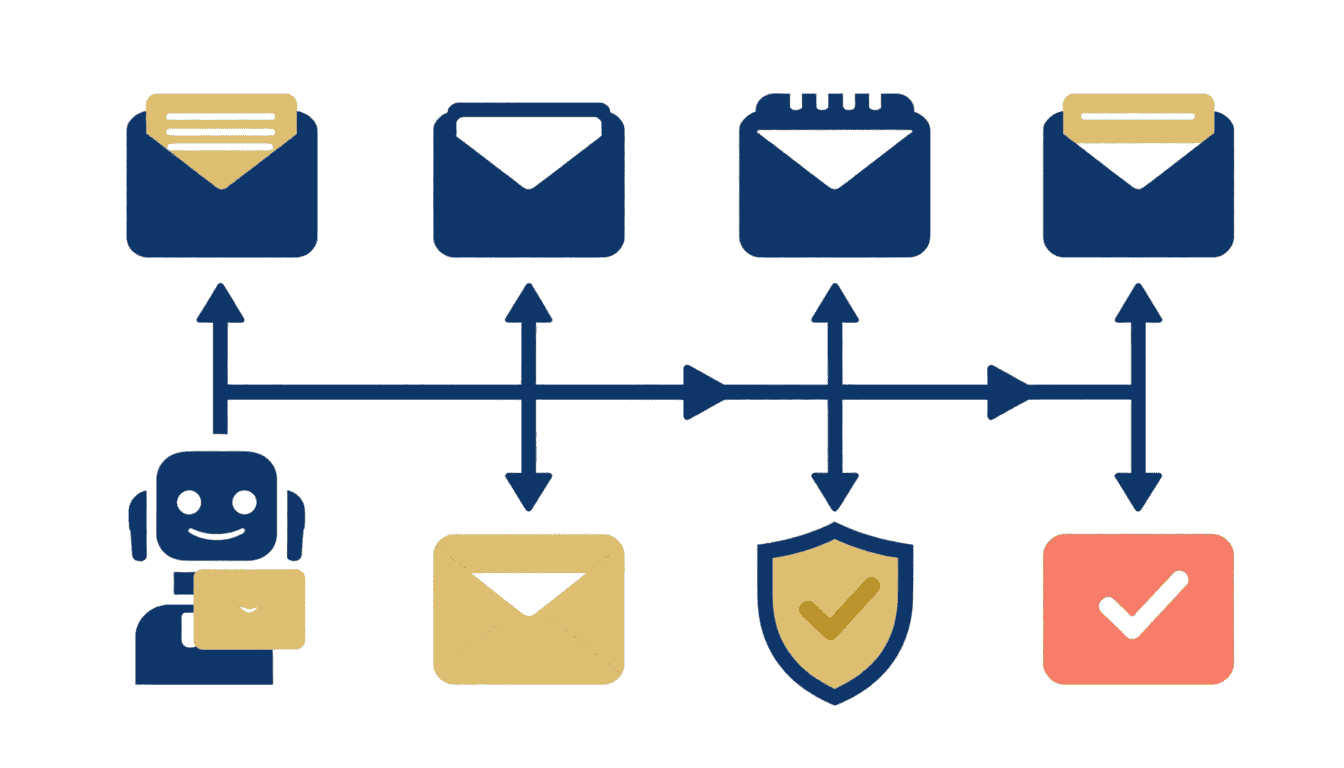
Artificial intelligence mail sorting for Delaware holding companies works in three stages. First, the AI model reads incoming compliance mail and classifies it by entity and filing type. Second, it extracts the due date and maps it against a running compliance calendar for the portfolio. Third, it flags anything approaching a renewal window — typically thirty to sixty days out — and surfaces it to the person responsible before the inbox gets crowded. The AI feature that matters most for holding companies is the due-date extraction capability.
This is not AI trying to do legal work. This is AI model-assisted document triage that historically required a compliance manager reading every piece of mail and deciding what mattered. What changed in 2026 is that the AI model classification accuracy is good enough that the false positive rate is low enough for the system to be trusted. That trust is what makes the difference between a team that uses the tool and a team that ignores it. Tech companies that have moved from inbox triage to AI classification show measurable drops in missed-deadline incidents within the first two quarters of deployment. For a team exploring whether to run entirely by artificial intelligence, the realistic starting point is mail classification — not decisions on which filings to file or how to respond to a service of process.
The Three Compliance Mail Categories That Matter for Holding Companies
Not all compliance mail is equal. For Delaware holding companies managing a multi-state portfolio, the mail falls into three urgency buckets. The first bucket is action-proximate: notices that require action within thirty days. Annual reports, biennial reports, and franchise tax payments all fall here. A missed action-proximate notice from a state where your entity is not actively operating is the most dangerous because the penalty for missing it — suspension or revocation — can affect bank account access, vendor contracts, and property leases before anyone realizes the problem started with an envelope nobody opened.
The second bucket is status-maintenance: certificates of good standing requests, registered agent change confirmations, and amendment filings that keep entity status clean. These do not have hard deadlines but they affect whether vendors and lenders can verify your entity is in good standing. These overlap with Delaware AI governance requirements where registered office addresses and officer information must stay current on public record.
The third bucket is informational: newsletters, regulatory updates, and general state correspondence that does not require action. AI flags the first two buckets for human review and archives the third automatically. In 2026, enterprise AI systems have reached a reliability level that makes this three-tier sorting trustworthy for compliance teams without a dedicated manager.
That sorting alone saves a compliance team hours per week and dramatically reduces the odds that an action-proximate notice gets buried.
How to Set Up AI Deadline Flags for a Multi-State Holding Company Portfolio
Setting up AI due-date flags for a Delaware holding company portfolio starts with getting all the entity records into one place. The entity name, the state of formation, the registered agent on record, and the next filing due date for each entity need to be in a format the AI can read. For most teams, this means a spreadsheet or a compliance management tool that the AI can access via API.
Once the entity list is loaded, the next step is connecting the registered agent mail stream. If your registered agent forwards mail digitally, the AI can read the forwarding address and classify each piece as it arrives. If mail is scanned on receipt, the scanned PDF or image goes into the same classification pipeline. The AI extracts the entity name, the filing type, and the due date from the document and matches it against the entity list. If the due date is within the flagging window, the system sends a reminder to the assigned owner and logs the document in the entity compliance file.
For one Delaware holding company managing five entities across five states, this means five separate renewal tracks are running simultaneously, each with its own reminder cadence in months like June 2026 and beyond. The owner or parent company tracks the portfolio through a single calendar that runs from January 2026 to December 2026, with each entity getting its own renewal lane and an AI agent flagging what is coming due across the full year. No single inbox owns all of them. No single person has to remember all five due dates. The system handles the remembering; the team handles the filing.
What Delaware Holding Companies Need to Track Beyond Deadlines
Deadlines are the sharpest risk for Delaware holding companies, but they are not the only risk. Registered agent changes, amendment filings, and registered office address updates all require state filings that affect what appears on the public entity record. If a registered agent changes in Delaware and the amendment is not filed, the old agent may still receive service of process for the LLC. If the registered office address changes and the filing is not updated, mail forwarded by the old address may not reach the right people.
AI mail sorting flags these document types separately from action-proximate notices because they are structurally different: they are not time-critical in the same way, but they create legal exposure if they are mishandled or ignored. Running a quarterly self-check against the Delaware Division of Corporations database for each entity in the portfolio takes a few minutes and confirms that what the AI is tracking matches what the state has on file. If the AI flagged a registered agent change but the filing has not been made yet, the quarterly check surfaces the gap before it becomes a problem. These compliance efforts compound across a multi-state portfolio, which is why quarterly reviews matter for holding companies that cannot afford a missed deadline on a property-holding entity.
How to Choose Which Entities to Flag First
Not all entities in a holding company portfolio carry equal risk when their compliance mail is missed. The entities that hold real property, bank accounts, or vendor contracts are the most time-sensitive to keep in good standing. If the entity holding the commercial lease in Arizona loses its good standing because a biennial report was missed, the landlord may have grounds to challenge the lease enforceability. If the Delaware parent entity is suspended, it can affect subsidiary governance and intercompany agreements.
For compliance teams building enterprise AI workflows in 2026, the U.S. federal regulators are clarifying how the high-risk systems and high-risk AI systems classifications apply to compliance tools. The conformity assessment and technical documentation requirements under the EU AI Act already apply to deployments that handle decision-making workflows. Companies that want their AI tools to be compliant by August 2026 should account for both regimes when they scope the build. The August 2026 milestone is when the broader prohibited-categories and high-risk AI systems obligations take effect.
Rank the entities in the portfolio by what a missed renewal would actually disrupt. Flag those entities first in the AI system. Expand the flagging window — from thirty days to sixty days — for the highest-risk entities so the team has more lead time to act. For lower-risk entities that exist primarily for holding intellectual property or holding a minority stake in another company, a thirty-day window is usually sufficient. The AI system can handle different flagging windows for different entities simultaneously, which means the portfolio gets managed as a differentiated set of risks rather than a flat list of entities all treated the same.
Building a Compliance Culture Around the AI System
The best AI mail sorting system still needs a human owner for each due-date flag. When the AI surfaces a forty-five day reminder for an Arizona biennial report, someone needs to log in, review the filing, and complete it within the window. The system removes the cognitive load of remembering what is due when. The team removes the cognitive load of deciding whether the filing is actually required.
For Delaware holding companies that have been managing compliance in shared inboxes with no clear ownership, moving to an AI-assisted system with assigned owners for each entity is a process change as much as a technology change. The process change has to come first. If the AI flags a deadline and nobody is assigned to own it, the flag goes unacted on until it becomes a crisis. Assigning owners — real names, not team inboxes — for each entity in the portfolio is the step that makes the AI system actually work.
For more on how AI workflows help multi-state compliance teams manage registered agent mail at scale, see our guide to AI workflows for multi-state compliance teams.
What Happens When a Compliance Mail Slip Actually Occurs
Even with AI flagging, sometimes a deadline slips in 2026. When it does, the fix depends on the state and how long the deadline was missed. Most states offer a reinstatement process for entities that were administratively suspended for missed annual or biennial reports. The reinstatement typically requires filing the missed report plus paying a penalty fee. Some states require a certificate of good standing from another state as part of the reinstatement. The reinstatement process for a Delaware holding company entity in a state where the holding company is not actively operating can usually be handled remotely, without hiring local counsel, if it is caught within the state’s reinstatement window.
If the entity has been administratively dissolved rather than suspended, the reinstatement process is more involved and may require additional steps. The fastest fix is always the one where the deadline did not slip in the first place. AI mail sorting with a thirty to sixty day lead time on deadline flags is the investment that makes reinstatement filings rare rather than routine.
For a full list of compliance deadlines across all fifty states, see our guide to building a 50-state compliance calendar for registered agent deadlines.
FinCEN BOI and Federal Reporting for Delaware Holding Companies
Beyond state compliance mail, Delaware holding companies with multiple entities also need to track U.S. federal requirements. Automated decision making tools used for compliance mail classification sit at the intersection of state AI governance and federal reporting. A system placed on the EU market or marketed to U.S. holding companies will need to satisfy both regimes.
Beyond state compliance mail, Delaware holding companies with multiple entities also need to track FinCEN Beneficial Ownership Information (BOI) reporting requirements. The Corporate Transparency Act requires certain entities to file BOI reports with FinCEN, and holding company structures with multiple subsidiaries can create complex beneficial ownership reporting scenarios. Missing a BOI filing deadline does not generate a state-level suspension notice — it generates a federal penalty. AI mail classification should include a bucket for federal reporting deadlines separate from the state compliance calendar.
The SEC small business compliance guidance also applies to holding companies that have issued securities or that are passively holding interests in operating subsidiaries. Monitoring SEC rule changes that affect holding company reporting obligations is another category of mail that should not live in the same bucket as general newsletters. AI can distinguish between SEC rule change notices, which may require action, and SEC enforcement newsletters, which are informational.
EU AI Act Oversight and Delaware Holding Company Compliance in 2026
The EU AI Act creates new oversight obligations for enterprises deploying AI systems that handle decision-making workflows, including compliance mail classification. The state of Delaware has no separate artificial intelligence laws, but new AI governance frameworks at the federal and U.S. state level are creating compliance obligations that overlap with Delaware’s registered agent requirements. Agentic AI systems that autonomously triage and flag compliance mail may face additional scrutiny under high-risk AI systems provisions, which trigger conformity assessment and technical documentation requirements under Annex III of the regulation. The EU AI Act is an example of how a major jurisdiction regulates AI in commercial workflows, and Delaware holding companies deploying these tools need to understand how it regulates AI in their compliance mail workflows. High-risk systems under the EU AI Act must demonstrate compliance before deployment, and Delaware holding companies deploying these tools need to stay compliant with both state registered agent rules and federal AI oversight requirements. The EU AI Act’s sandbox provisions and AI sandbox initiative allow enterprises to test AI model deployments in controlled environments before full rollout, which is relevant for compliance teams that want to validate classification accuracy before trusting the system with deadline-proximate notices.
The Delaware AI Commission and general assembly discussions around responsible AI and automated decision making are worth monitoring in 2026 compliance planning for companies that use advanced AI models to handle entity data. As these state AI governance frameworks grow, autonomous companies and minimally-staffed holding structures will need to account for both state-of-Delaware corporate obligations and federal data governance requirements when they deploy AI tools for compliance workflows. As EU member states regulate AI tools under the AI Act, U.S. federal agencies are also clarifying which AI features in corporate compliance workflows require additional oversight. Each state AI governance framework may regulate AI deployment differently, and the EU AI Act is one example of how a major jurisdiction regulates AI systems in commercial workflows. These frameworks affect how compliance teams configure their AI tools for multi-state portfolios. State and federal rules together form the legal infrastructure for autonomous commerce that any AI-assisted compliance workflow sits inside. High-risk systems under the EU AI Act require conformity assessment before deployment, and enterprises using new AI features in compliance workflows should account for that timeline in their 2026 planning. Using an AI model on a deadline-proximate compliance queue is a high-impact decision, so data governance and audit trails become as important as the classification accuracy itself.
Automated Decision Making and Compliance Mail Workflows
Automated decision making sits at the heart of every AI-assisted compliance mail workflow a Delaware holding company deploys in 2026. The system reads the document, classifies it, and decides what flag to surface to the assigned owner without a human reviewing the document first. That decision loop is exactly what new state and federal AI governance frameworks are scrutinizing in 2026, especially for high-risk AI systems that handle entity data across state lines.
For Delaware holding companies, the practical implication is that any automated decision making pipeline must include an audit trail. The team needs to be able to show what the AI read, what it decided, and what action followed. Without that trail, the system is not compliant with the EU AI Act technical documentation requirements or with the conformity assessment standards that take effect in August 2026. Building the audit trail in from day one is far cheaper than retrofitting it after a regulator asks for it.
Keeping AI Tools Compliant With State and Federal Frameworks
Staying compliant in 2026 means more than choosing the right AI vendor. The holding company is responsible for how the tool behaves on its data, which is why the high-risk AI systems framework treats the deployer as much as the developer. A Delaware holding company using AI tools for compliance mail classification should confirm that the vendor can produce conformity assessment documentation, that the deployment itself is registered if required, and that the team understands which compliance obligations apply to the workflow.
The fastest path to a compliant AI deployment is to keep the workflow narrow. AI mail sorting, deadline flagging, and entity classification are within the current conformity assessment standards. AI that autonomously decides whether to file a state report, signs documents on behalf of the company, or makes entity-level decisions without a human owner falls outside the safe zone. Keeping the human owner in the loop for every filing decision is what keeps the tool compliant and what keeps the holding company on the right side of both state and federal AI governance frameworks.
How to Deploy an AI Agent for Delaware Holding Company Compliance in 2027
Looking ahead to 2027, Delaware holding companies that want to deploy an AI agent for full compliance mail management should start the evaluation process in 2026. AI tools built for corporate governance workflows can reduce the manual effort required to keep multi-state portfolios in good standing. For holding companies whose Delaware parent structure is purely administrative and whose subsidiaries are the entities with active operations, using an AI on a deadline-proximate compliance queue is a high-impact decision, so building a complex AI deployment that still misses deadlines is a worse outcome than not deploying at all. The steps to deploy include assessing the AI model’s classification accuracy against historical compliance mail data, establishing a sandbox testing environment, setting flagging windows by entity risk tier, assigning human owners for each deadline flag, and configuring the system to route compliance notices to the right team members.
The EU AI Act sandbox framework makes it easier to validate an AI agent’s compliance mail classification before going live. Delaware holding companies can use the sandbox period to tune the model on entity-specific terminology, registered agent letter formats, and state-specific filing language. By the time 2027 arrives, the system is calibrated and the human team knows exactly how to act on the flags it generates. Deploying an AI agent for compliance mail management is not a set-it-and-forget-it decision. The model needs periodic retraining as state deadlines, entity names, and filing requirements change. A governance schedule that reviews AI model output quarterly catches classification drift before it causes missed deadlines.
Related Reading
- AI Workflows for Multi-State Compliance Teams
- Build a 50-State Compliance Calendar for Missing Registered Agent Deadlines
- Registered Agent Requirements by State
Frequently Asked Questions
What compliance mail do Delaware holding companies receive most often?
Annual reports, biennial reports, franchise tax notices, registered agent change confirmations, and amendment filing reminders. AI sorts these by urgency and flags deadline-proximate items before the inbox becomes the bottleneck.
How does AI help Delaware holding companies manage multi-state compliance mail?
AI reads incoming compliance mail, classifies it by entity and filing type, extracts the deadline, and maps it against a running portfolio calendar. Entities approaching their filing window get flagged 30-60 days out so the team can act before the deadline passes.
What is the biggest risk of missing a compliance deadline for a holding company entity?
For entities holding real property, bank accounts, or vendor contracts, suspension or revocation for a missed annual or biennial report can affect lease enforceability, bank account access, and contract validity. The missed deadline that hurts most is the one nobody noticed was approaching.
Can AI completely replace a compliance manager for a Delaware holding company portfolio?
No. AI handles the document triage, classification, and deadline flagging. A human owner is still needed to review each flagged item, complete the actual state filing, and confirm the filing was processed. AI removes the remembering; humans do the acting.
What is the reinstatement process if a holding company entity misses a filing deadline?
Most states offer reinstatement for administratively suspended entities by filing the missed report plus paying a penalty fee. Some require a certificate of good standing from another state. Reinstatement is more complex for fully dissolved entities than for those still in suspended status.
How do I prioritize which entities in a holding company portfolio to flag first?
Rank by what a missed deadline would actually disrupt. Entities holding real property, bank accounts, or active vendor contracts should have a 60-day flagging window. Lower-risk entities holding IP or passive investments can use a 30-day window. The AI system supports different windows per entity simultaneously.
Delaware Holding Company Compliance
Managing a multi-state holding portfolio without missing a deadline?
Rapid Registered Agent covers Delaware registered agent service and multi-state compliance mail management. AI-powered deadline flagging keeps every entity in your portfolio in good standing. Start for $10 per state per month.
- States Covered
- 50
- Price Per State
- $10/mo
- AI Deadline Flags
- Yes