
Kansas Remote Employee Setup in 2026: Payroll Steps to Finish Before the First Out-of-State Hire

Kansas Remote Employee Setup in 2026 starts with one blunt question: where will the employee actually work?
If you were a quiet business in Kansas in 2025 and only paid owners, this first hire changes the whole setup.
You can sign the offer letter in five minutes. You can miss the tax setup in five seconds. That is how a clean first hire turns into a tax bill.
Remote work made this problem normal after the COVID-19 pandemic. By 2021, even small businesses were hiring across state lines. Now a fully remote plan can put one worker in Kansas and another state on the same week. That flexibility is great for growth. It is not great if you guess.
The good news is the order is simple. Find the true work location. Match the state tax rule to that location. Open the right accounts before the first pay run. Then document the workplace rule so the answer stays clear.
Remote work since 2021: start the Kansas setup with the work location in 2026
Your first hire is not a software problem. Your first hire is a location problem.
KDOR says withholding depends on where services are performed. That is the anchor point for Kansas tax. If the employee works in Kansas, Kansas tax can apply. If the employee works in a different state, that state gets a say too.
Do not guess from the mailing address alone. Do not guess from the office address. Use the place where the employee working for you actually performs services. That work location drives taxation, filing, and notice rules. The State of Kansas and other state laws care about where the worker is doing the job, not where the founder hoped the job would happen.
This is why small firms need a written remote work policy before hiring employees in new states. That policy should say whether the worker may work remotely from only one state or from more than one state. It should also say the employee must report any move, any regular travel pattern, and any home office change before it happens. That one rule prevents a lot of cleanup later.
If the employee works from home in Kansas, the Kansas rules are the starting point. If the employee works from home in another state, you switch to that state for the first tax registration review. If the employee splits time, you may need an allocation method instead of an all-or-nothing answer.
Kansas withholding tax, income taxes, and state income tax withholding for remote workers who work from home
Kansas has a very specific rule on state income tax withholding. According to the Kansas withholding FAQ, an employer must withhold Kansas tax when a Kansas resident performs services inside or outside Kansas, and when a nonresident performs services in Kansas. That one sentence changes how you read every remote hire. Kansas law treats employees who live in Kansas differently from nonresidents when wages cross state lines.
Here is the clean version. If a nonresident works entirely outside Kansas, Kansas withholding does not apply. If a nonresident is working in Kansas, Kansas withholding does apply. If a Kansas resident lives in Kansas but works outside Kansas, Kansas can still require withholding, reduced by the amount required by the other state. That is the part many owners miss.
So no, the answer is not always “stop Kansas withholding the second the worker leaves the state.” That may be right for a nonresident. It may be wrong for a Kansas resident. That is why the work state and the state of residence both matter.
Kansas also gives employers a tool for partial allocation. The FAQ says an employee may estimate the percentage of services performed in Kansas, and substantial changes must be reported within 10 days on a new form. That matters when the employee works remotely most days but is still working in the state part of the week.
The ordinary K-4 withholding allowance certificate is still part of the file for Kansas wages. It tells you how much Kansas withholding tax to take from pay tied to Kansas sources. The K-4C helps when only part of the wages are taxable in Kansas. Together, those forms help you withhold income and withhold income tax in a way the state can follow. They also help the worker file the right state income tax return at year end instead of untangling the wages later.
For a Kansas employer, the safer habit is simple. Collect the federal W-4. Collect the Kansas form when Kansas wages are in play. Collect the other state form when another state requires its own setup. Then make sure the first pay run matches the real facts, not the office assumption.
Employer tax registration and remote work tax before an employee works from home in another state
The next issue is nexus. One worker can create nexus in another state even when your company has no office there. That does not mean every state will demand the same filings. It does mean you need to check before the first check goes out.
For most owners, the first three questions are enough. Is the worker performing services in that state? Does that state require employer withholding registration? Does that state require an unemployment account or entity registration too?
That is the remote work tax review in plain English. You are checking whether the new state can tax on wages, require filings, or pull your company into a broader registration path. If you sell goods, do one sales tax check at the same time.
What creates employer nexus?
Usually it is ongoing in-state work, not just a mailing address. If an employee works from home in another state on a steady basis, that state may claim tax on wages and other filing rights fast.
This is where many Kansas employers get tripped up. They think the office state controls everything. It does not. A worker in a different state can bring state-specific rules with them on day one. That is why employees in new states usually need a separate registration review even when the company already has a clean Kansas setup.
For more on the bigger multi-state signal, read Hiring Your First Remote Employee in 2026 and When a Remote Hire Triggers Foreign Qualification. Those two pieces help you see whether the issue is only withholding or a broader expansion question.
Kansas department of revenue and the withholding tax account
If this is a new Kansas employer, you need to register with the state tax system before you try to file anything. The Kansas business registration page points businesses to the Customer Service Center to register and pay business taxes. The KW-100 withholding guide says employers must register to withhold Kansas income tax from wages and other taxable payments subject to Kansas withholding tax.
That means you need a withholding tax account before you can file returns cleanly. It also means you need to keep filing even when a period drops to zero, because Kansas says active accounts still owe returns. That is better to know before the first deadline than after the first notice.
Think of it this way. Federal income tax is one layer. Kansas tax is one layer. The work state may be another layer. You are not building a giant system. You are just matching the right wages to the right bucket before tax due dates show up.
Kansas department of labor, employees in Kansas, and unemployment insurance
KDOL handles the unemployment side. Its new hire reporting page says employers must report newly hired and re-hired employees in Kansas to the New Hire Directory within 20 days of hire. That rule helps enforce child support orders and supports Kansas families. If you have employees in Kansas, do not skip it.
Its unemployment tax page also says most employers subject to FUTA are required to pay state unemployment tax, and quarterly due dates fall on April 30, July 31, October 31, and January 31. That is not hard. It is just easy to miss.
This is where owners confuse a remote hire with a contractor arrangement. Do not do that. The IRS says worker status turns on behavioral control, financial control, and the type of relationship. An IRS worker classification page also says a remote worker can still be your employee if you control what will be done and how it will be done. If you guess wrong here, every later filing gets worse.
If you want a simple internal cross-check, use our employee vs contractor guide. It is a fast read, and it helps you spot the risk before you treat the first worker like a vendor.
Small businesses, Kansas employment, and the workplace details owners skip
The tax account is not the whole setup. You also need the paperwork that explains how the job works.
Start with the handbook. Add the approved work location. Add notice rules for a move. Add reimbursement rules. Add timekeeping rules for nonexempt staff. Add security rules for company devices. That is basic employment law hygiene, and it keeps the workplace predictable.
Kansas wage rules matter too. The Kansas workplace laws page reminds employers that workplace laws operate at both a federal and state level. If your team is covered by federal rules, those may control overtime and recordkeeping. If not, Kansas has its own wage and hour rules. That is another reason to document classification, schedule, and hours early.
A Missouri example that shows how the facts change the answer
Say your company is based in Overland Park. Your designer lives in Kansas City, Missouri. The person works in Missouri five days a week.
Missouri says remote wages are subject to Missouri withholding when the employee performs services there. Its remote work resource page says wages are subject to Missouri withholding when employees perform services for wages in Missouri, even for an out-of-state employer. It also says Missouri does not honor reciprocity with other states.
That means a Kansas employer cannot assume a border-town shortcut. If the worker works in Missouri, Missouri is not optional. If the same person later lives in Kansas and works in Missouri, the state of residence changes but the Missouri work fact still matters. If the same person works in Missouri and comes home one day each week to work in Kansas, now you may have a number of days worked issue and a K-4C allocation question.
This is the practical lesson. Ask where the employee works from. Ask how often. Ask whether that pattern will stay stable. Then document it before the first check.
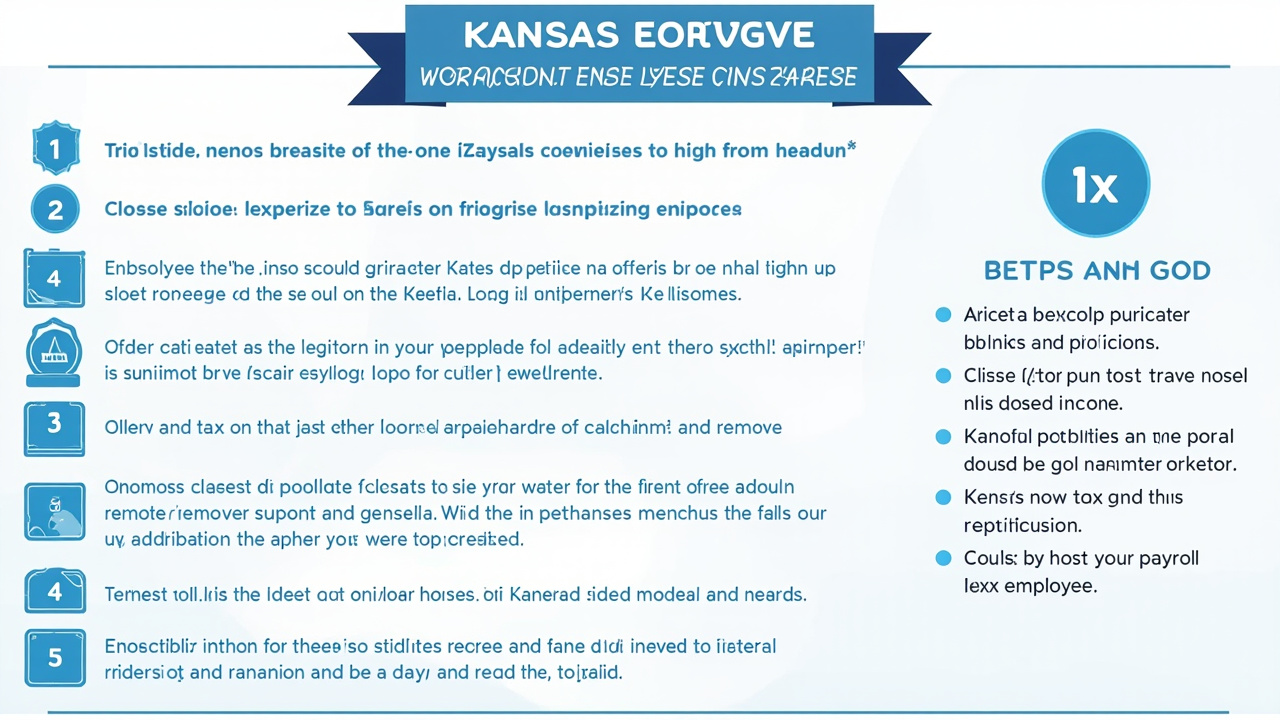
The 2026 remote employee payroll checklist for Kansas tax and nexus before the first out-of-state hire
1. Confirm the home state and the actual work state. Get the address. Confirm whether the employee works from home full time or travels. If the answer is another state, write that down.
2. Decide whether the worker is an employee or a contractor. Use the IRS control test. Document the answer. Do this before the person touches billable work.
3. Open the right tax accounts. Set up the Kansas withholding tax account if Kansas wages are involved. Open the work-state withholding account if the worker performs services there. Do not wait for the first filing reminder.
4. Open the labor-side account. Register for unemployment insurance where required. If the worker is in Kansas, report the hire on time. If the worker is elsewhere, check that state’s new-hire rule too.
5. Review workers compensation. Kansas says employers with gross annual payroll above $20,000 generally must secure coverage, and the civil penalty for failing to do so can be twice the annual premium or $25,000, whichever is greater. That is an expensive way to learn about an exemption. Call the carrier before the start date.
6. Update the handbook and offer packet. Add the remote-work policy. Add the approved state. Add timekeeping, reimbursement, and security rules. That keeps the paperwork aligned with the pay setup.
7. Set a calendar for every filing date. Do not trust memory. Put quarterly wage reporting, annual forms, and any work-state deadlines on a live calendar. The cleanest system is the one you can still follow six months later.
Frequently Asked Questions
Do I need Kansas withholding if the worker lives in Kansas but works in another state?
Sometimes yes. Kansas says a Kansas resident working outside Kansas can still trigger Kansas withholding, reduced by the amount required by the other state, unless the K-4C allocation process shifts that responsibility. That is why the home state and work state both matter.
What if the employee works entirely outside Kansas and is not a Kansas resident?
Kansas says those wages are not subject to Kansas withholding. That does not mean no withholding applies. It means you need the other state’s rule instead.
When should I use Form K-4C?
Use it when only part of the worker’s services are performed in Kansas and you need an allocation method for Kansas withholding. Kansas says substantial changes should be reported within 10 days on a new form. That keeps the percentage current.
Does one remote hire really create nexus?
Often yes. One remote hire can be enough for employer filings in another state. Whether it also creates entity registration or other taxes depends on that state’s rules and your facts.
What if the employee works in another state now but plans to move later?
Set up the first state first. Then redo the review when the move becomes real. Do not file for a future address that has not happened yet.
What if the employee works in Kansas and another state during the same year?
Track the pattern. Track the number of days. Track whether the wages are partly within the state. That record gives you the data you need for allocation, forms, and the year-end W-2.
Kansas Remote Hiring
Set Up the State Rules Before the First Check
Kansas remote employee setup in 2026 gets easier when you confirm the work location first, open the right tax accounts, and document the policy before day one. Rapid Registered Agent helps growing companies stay organized as they hire across state lines.
- Focus
- Remote hiring
- First step
- Work location
- Risk reduced
- Before day one