How to Organize Annual Report Deadlines Across Multiple States in 2026

How to Organize Annual Report Deadlines Across Multiple States in 2026 starts with accepting one uncomfortable truth: there is no single national filing calendar that saves you from state-by-state chaos.
One state wants a report every year.
Another wants a biennial filing.
Another ties the deadline to your formation month.
Another calls it something else entirely.
If you manage more than a few entities, the problem is not remembering one date.
The problem is building a system that still works when the dates, fees, filing names, and responsible people all vary.
Start with the real goal
Most teams think the goal is to remember deadlines.
That is only half right.
The real goal is to create a process that catches the deadline early enough for someone to act on it.
A filing reminder that shows up two days before the due date is not a system.
It is a warning flare.
Good multi-state compliance work means every entity has a filing owner, a source-of-truth record, an internal review date, and a backup path when the owner is out.
Why multi-state annual report tracking breaks down
Annual report tracking usually fails for boring reasons.
The spreadsheet lives in one person’s folder.
The registered agent reminders go to an inbox nobody monitors carefully.
The legal team assumes finance is watching.
Finance assumes legal is watching.
Someone sees “statement of information” or “franchise tax report” and does not realize it belongs on the same compliance calendar as a classic annual report.
If that sounds familiar, Rapid Registered Agent’s article on registered agent mail automation for multi-state compliance teams is a good companion piece because the notice-handling problem and the deadline-tracking problem are usually the same operational weakness wearing different clothes.
The five fields every multi-state deadline tracker needs
If your tracker does not have these fields, rebuild it.
Entity legal name.
State or jurisdiction.
Exact filing name used by that state.
Official due date rule.
Internal action dates at 60 days, 30 days, and 7 days before the real due date.
Then add four more fields that teams often skip and later regret.
Current status.
Assigned owner.
Filing fee.
Official filing URL.
That last field matters more than it looks.
When someone has to hunt the state portal every time, the process slows down and errors creep in.
Build one source of truth, not three half-systems
The best setup is one master tracker that every team uses.
It can live in a spreadsheet, a project-management tool, or a compliance platform.
The exact software matters less than the discipline.
There should be one live record for each entity and one place where the deadline logic is stored.
No side spreadsheets.
No duplicate reminders that drift out of sync.
No “I thought the registered agent portal was handling it.”
Use a three-layer calendar instead of one date
This is the trick that keeps the system human.
Do not store just the legal due date.
Store three working dates around it.
The 60-day date is for review.
The 30-day date is for finalizing who files and confirming the public record is still correct.
The 7-day date is for escalation if the filing is still not done.
This turns a deadline into a workflow.
It also gives you time to fix the hidden blockers that often surface late, like stale registered-agent data, missing login access, or uncertainty about whether a foreign qualification is still active.
Why state examples matter in 2026
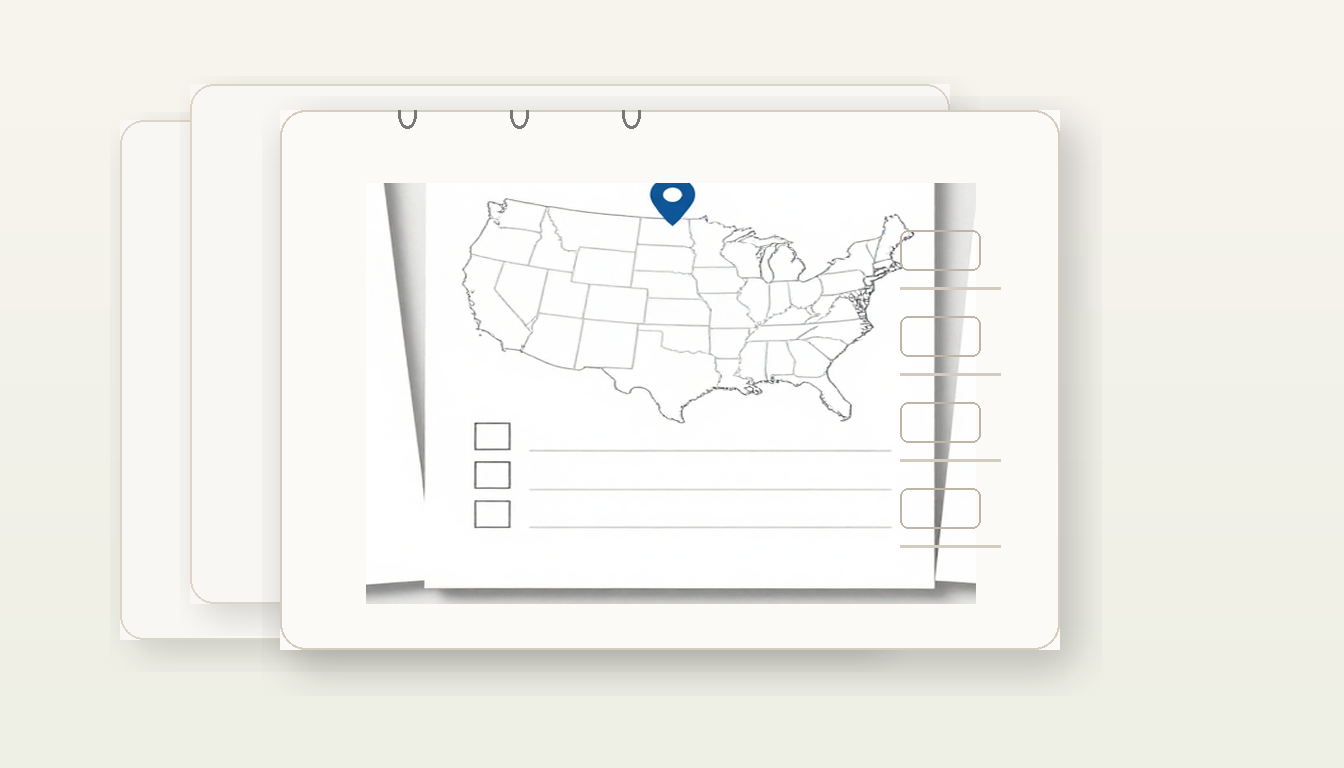
Generic advice sounds nice until you hit the state-level details.
In Delaware, the rule changes depending on the type of entity.
The Delaware Division of Corporations says corporate annual reports and franchise taxes are due by March 1, while the same state says LLCs do not file an annual report at all and instead pay annual taxes by June 1.
That means a sloppy tracker can easily put the wrong Delaware entities on the wrong filing cycle.
Florida gives you a different pattern.
Sunbiz says annual reports are due every year between January 1 and May 1.
The Florida fee page also shows the cost jump after the deadline, including a much higher late-file total for LLC annual reports received after May 1.
That is a perfect example of why your tracker needs both the due date and the fee consequences.
California uses another logic entirely.
The California Secretary of State’s Statements of Information guidance and business entity FAQ page explain that corporations and LLCs do not all follow the same annual cycle.
Some filings are annual.
Some are every two years.
Some depend on the entity’s registration date and filing window.
This is why “we’ll just review every entity in January” sounds organized but fails in practice.
How to assign ownership without confusion
Every entity should have one primary owner and one backup owner.
Not a department.
A person.
The primary owner is responsible for making sure the filing gets done.
The backup owner is responsible for stepping in when the primary is out or overloaded.
If you only assign a team name, accountability gets fuzzy fast.
That is one reason multi-state operators benefit from standardizing their broader compliance structure, as discussed in how franchises should standardize registered agent processes across multiple states.
Keep the filing rule and the filing proof together
A surprising number of teams track the due date but not the evidence.
Do not stop at “filed.”
Attach the confirmation number, submission date, receipt, and copy of the accepted filing.
The IRS guidance on business recordkeeping is a useful reminder here.
Even though state annual reports are not federal tax filings, the same discipline applies.
If you cannot prove what was filed and when, your system is weaker than it looks.
A practical workflow that actually works
Step 1: inventory every active entity
List every domestic entity and every foreign-qualified entity.
Do not rely on memory.
Do not assume someone else has a perfect list.
If an entity is registered in a state, it belongs in the tracker.
Step 2: confirm the official filing name
Some states use annual report.
Some use statement of information.
Some use biennial report.
Some pair the filing with a tax payment.
Record the exact state term so nobody wastes time guessing later.
Step 3: map the official due-date rule
Do not just write a single date.
Write the rule.
For example: “May 1 every year,” “March 1 for corporations,” “June 1 annual tax for LLCs,” or “every two years based on registration year and month.”
The rule matters because it is what lets you update the system correctly next cycle.
Step 4: set internal reminder dates
Add the 60-day, 30-day, and 7-day checkpoints.
If your team is larger or your entities are more complex, add a 90-day planning date too.
Step 5: assign a primary and backup owner
Put names in the tracker.
Make sure both people know the assignment is real.
Step 6: store proof after filing
Save the confirmation and mark the next cycle immediately.
Do not leave the reset for later.
What to review at the 60-day mark
The 60-day review should answer four questions.
Is the entity still active in that state.
Is the registered agent information still correct.
Do we still control the filing login.
Has the state changed the form, fee, or process.
This is also the right time to check your broader compliance posture.
The SBA’s stay legally compliant guidance is broad, but it reinforces the same operational reality: business compliance gets easier when you review requirements before the deadline window gets tight.
Common mistakes that create avoidable misses
Treating all states as if they use the same annual deadline.
Forgetting that foreign-qualified entities have their own filing cycle.
Tracking the due date but not the filing portal.
Relying on one employee’s personal reminders.
Ignoring reminder emails because nobody knows whether they are routine or urgent.
Assuming the registered agent alone is managing the filing obligation.
Not updating the next cycle as soon as the current filing is accepted.
What a strong 2026 dashboard should show
If you want a quick weekly review, your dashboard should show:
All filings due in the next 90 days.
All entities missing an assigned owner.
All filings marked in progress but not completed.
All jurisdictions with changed fees or rules.
All entities where the registered-agent or login data needs verification.
That gives leadership a clean picture without forcing them to dig through every entity row.
Where a registered agent fits into the system
A registered agent is not the whole system.
But a stable registered-agent setup makes the system easier to run.
When the same provider handles notices across multiple states, reminders and official correspondence are easier to centralize.
If your team is still managing scattered providers or inconsistent notice flows, the annual-report calendar will always feel harder than it should.
If you want to tighten the operating side, start with a multi-state registered agent setup and then build the deadline tracker around that cleaner intake.
Frequently Asked Questions
What is the best way to organize annual report deadlines across multiple states?
The best way is to keep one master tracker with the official filing rule, exact due date, filing fee, filing link, primary owner, backup owner, and 60-day, 30-day, and 7-day internal reminders for each entity.
Should I use one calendar or separate state calendars?
Use one master system. You can filter it by state, but the source of truth should stay centralized.
Do all states use annual reports?
No. Some states use annual reports. Some use biennial filings. Some use statements of information. Some pair the compliance date with taxes or other maintenance filings.
Why is the 60-day reminder so important?
Because most filing problems are discovered before the due date, not on it. The 60-day mark gives you time to fix access, verify entity details, and confirm who is filing.
What should I save after filing?
Save the filing confirmation, the accepted copy, the fee paid, and the next due-cycle rule. Then update the next cycle immediately.
Bottom line
How to Organize Annual Report Deadlines Across Multiple States in 2026 comes down to one disciplined system with state-specific rules, named owners, early review dates, and filing proof stored right next to the deadline instead of scattered across inboxes, which is the only reliable way to scale How to Organize Annual Report Deadlines Across Multiple States in 2026.
Multi-State Compliance
How to Organize Annual Report Deadlines Across Multiple States in 2026
RRA tracks annual report deadlines across every state where your LLC is registered, files on time, and keeps your multi-state entity in good standing without the calendar management.