
Registered Agent vs. Virtual Office: What’s the Difference?

Registered Agent Services vs Virtual Office Services: Understanding Key Differences for Business Compliance
By Andrew Traub, Rapid Registered Agent, LLC
Choosing between registered agent and virtual office services affects legal standing and daily operations. Both support compliance and functionality but serve distinct duties and benefits. This article clarifies those differences so business owners can pick the right compliance strategy.
The guide covers the core duties of registered agents, virtual office offerings, points of overlap, and criteria for choosing the best mix of services for your business.
Comparison of Registered Agent vs. Virtual Office Services
Registered agents and virtual offices meet different needs. A registered agent is legally required to accept official documents and help ensure state compliance. A virtual office provides administrative services—such as a business address and mail handling—without accepting legal process.
Both can improve professional image and efficiency, but only registered agents fulfil statutory obligations. Knowing the distinction helps owners remain compliant while running operations smoothly.
What are the primary roles and responsibilities of a Registered Agent?
A registered agent receives official legal documents for a business. Key duties include the following:
- Receiving Legal Documents: Accepts service of process, including summons and complaints.
- Forwarding Important Notices: Quickly relays tax notices and state communications so the business can respond on time.
- Maintaining Compliance Records: Keeps organized records of received documents for audits or legal inquiries.
These responsibilities ensure timely handling of legal matters and help businesses meet statutory obligations.
How does a Registered Agent ensure legal compliance and secure document handling?
Registered agents provide a physical address and are available during business hours to receive time‑sensitive documents. Their record‑keeping supports filings like annual reports and helps businesses meet state deadlines.
They securely store and manage legal correspondence, reducing the chance of lost or delayed notices so companies can focus on operations.
What benefits do businesses gain from using a Commercial Registered Agent?
Using a commercial registered agent offers these advantages:
- Compliance with State Laws: Ensures filings and deadlines are tracked and met.
- Enhanced Privacy: Uses the agent’s address to keep owners’ personal addresses private.
- Efficient Document Handling: Specialized processes lower the risk of missed legal notifications.
These benefits reduce non‑compliance risk and give owners confidence that legal obligations are managed professionally.
What defines a Virtual Office Service and its core offerings?

A virtual office provides administrative services that let a business operate without a full‑time physical location. Core offerings typically include:
- Business Address: A professional address that improves company image without office overhead.
- Mail Handling Services: Receiving, scanning, emailing, or forwarding business mail promptly.
- Branding Support: Optional phone answering, meeting room access, and similar services to present a polished presence.
These services offer flexibility and lower costs while maintaining a professional appearance.
How does a Virtual Office provide a legitimate business address and mail handling?
Virtual offices lease space in professional buildings so businesses can use a credible address for registration and correspondence without a full‑time office. Mail handling often includes scanning and delivering digital copies or forwarding physical mail.
This lets companies operate remotely while preserving timely communication and a professional front.
What are the limitations of Virtual Office services regarding legal agent duties?
Virtual offices cannot generally act as registered agents and do not meet the legal requirement to accept service of process. Relying on a virtual office for that role risks missed legal notices or default judgments.
They also usually lack the dedicated secure workflows and long‑term records management commercial registered agents maintain, which can increase compliance exposure.
How do Registered Agent Services and Virtual Office Services differ in meeting state requirements for business compliance?
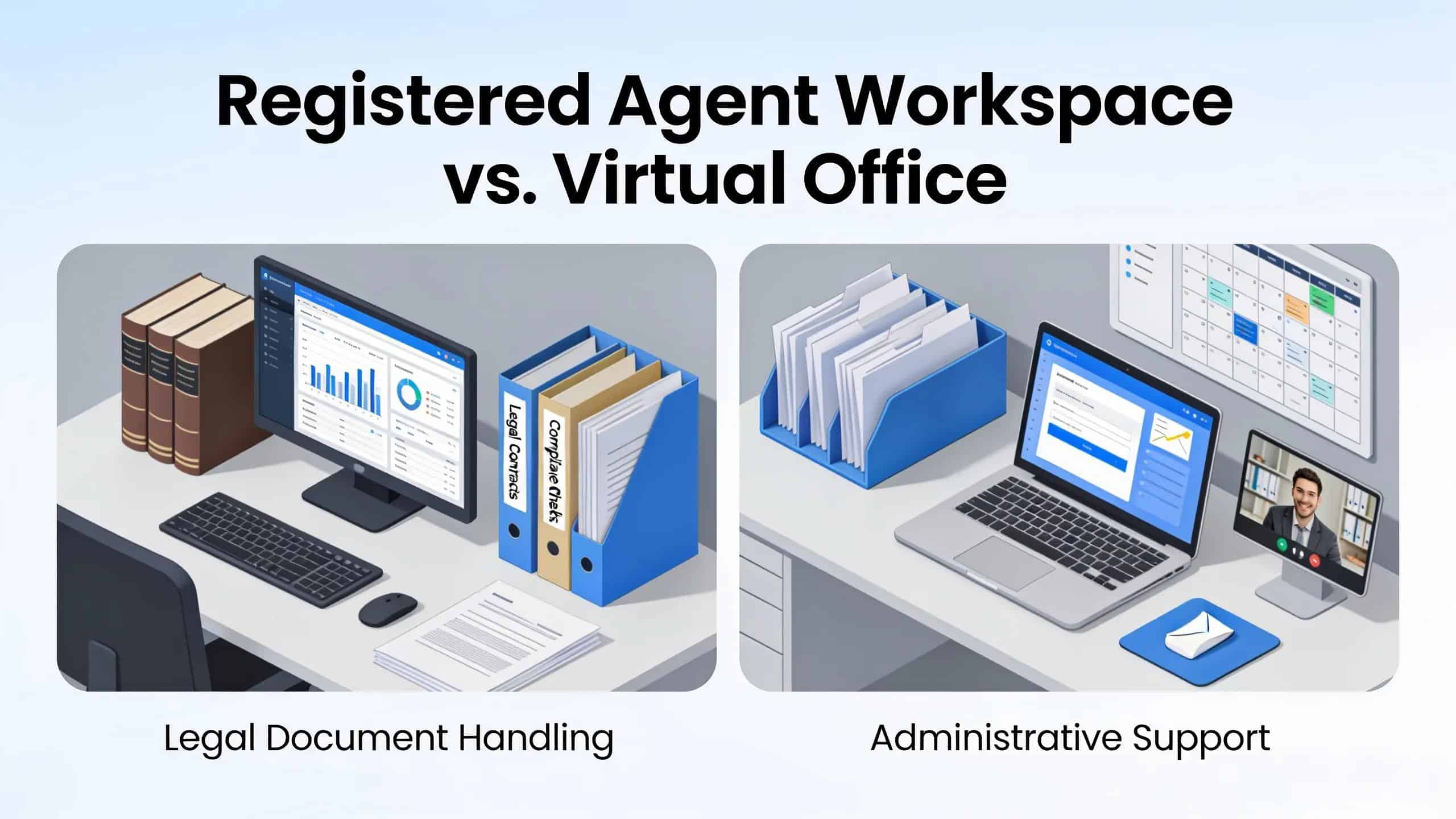
The primary difference is legal compliance: registered agents satisfy state requirements and accept official documents, while virtual offices offer administrative support and do not fulfil that statutory role.
Appointing a proper registered agent is essential to avoid penalties and other legal consequences.
Can a Virtual Office serve as a Registered Agent according to legal standards?
Most legal standards prevent virtual offices from acting as registered agents because an agent must be reliably available during business hours to accept documents—a capability many virtual offices do not guarantee.
Businesses should appoint a dedicated registered agent to meet legal requirements and may use virtual office services separately for operational benefits.
What legal risks arise from confusing Registered Agent and Virtual Office functions?
Mixing these roles creates several risks, including:
- Compliance Penalties: Missing required notices can lead to fines or penalties.
- Missed Legal Notifications: Not receiving critical documents can result in default judgments or loss of rights.
- Address Misuse: Using an address incorrectly can complicate legal standing and service procedures.
Understanding each service’s responsibilities is key to protecting the business.
How should businesses choose between Registered Agent and Virtual Office services?
Consider these factors when deciding:
- Evaluate Compliance Needs: If legal document handling and filings are required, a registered agent is essential.
- Consider Operational Requirements: For customer contact, mail, or a prestige address, a virtual office can help.
- Assess Budget Implications: Compare annual and monthly costs against the services you need.
Balancing these elements helps identify the right combination to keep the business compliant and operational.
What factors determine the right choice for maintaining compliance and operational needs?
When selecting services, assess:
- Purpose of Service: Legal representation versus administrative support.
- Cost Considerations: How fees fit your budget over time.
- State Regulations: Local rules on registered agents and any required filings.
Weigh these items to support long‑term compliance and operational goals.
How do pricing and service features compare between Registered Agent and Virtual Office options?
Registered agent fees are usually annual, commonly about $100–$300 depending on service level.
Virtual office plans vary by provider and features and often start around $50 per month.
Knowing these structures helps allocate budget and choose services that protect legal standing and improve efficiency.
Combining registered agent and virtual office services can be a strategic investment to maintain compliance while supporting growth.
Frequently Asked Questions
1. What should businesses consider when selecting a registered agent?
Choose an agent known for reliability, availability during business hours, and responsive customer support. Industry experience is a plus.
2. Can businesses change their registered agent, and what is the process?
Yes. Changing typically requires filing a form with the state Secretary of State and paying any fee. Appoint the new agent before ending the old to avoid gaps.
3. Are virtual office services suitable for all types of businesses?
Virtual offices suit many small or home‑based businesses and startups by lowering costs and improving image. Businesses needing in‑person service may still require physical offices.
4. How can businesses ensure they are compliant with state regulations?
Track filing deadlines and local rules, use a registered agent for legal notices, keep a compliance calendar, and seek legal advice for complex issues.
5. What additional services do commercial registered agents typically offer?
Many provide compliance alerts, records management, notary services, and advisory support to help navigate regulatory obligations.
6. How does using a virtual office impact a company’s branding?
A virtual office can enhance branding by supplying a professional address and services like phone answering and mail handling to present a more established image.
7. What are the potential consequences of not having a registered agent?
Without a registered agent, businesses risk missed legal notices, default judgments, fines, and reputational harm. A reliable agent helps protect legal standing.
Conclusion
Understanding the differences between registered agent and virtual office services is vital for compliance and efficient operations. Use each service for its intended role: appoint a registered agent for legal acceptance and consider a virtual office for operational flexibility and branding. Review requirements and engage the services that best support your business needs.