Kansas AI Website Chatbots in 2026: What Helps Conversions Without Weak Answers
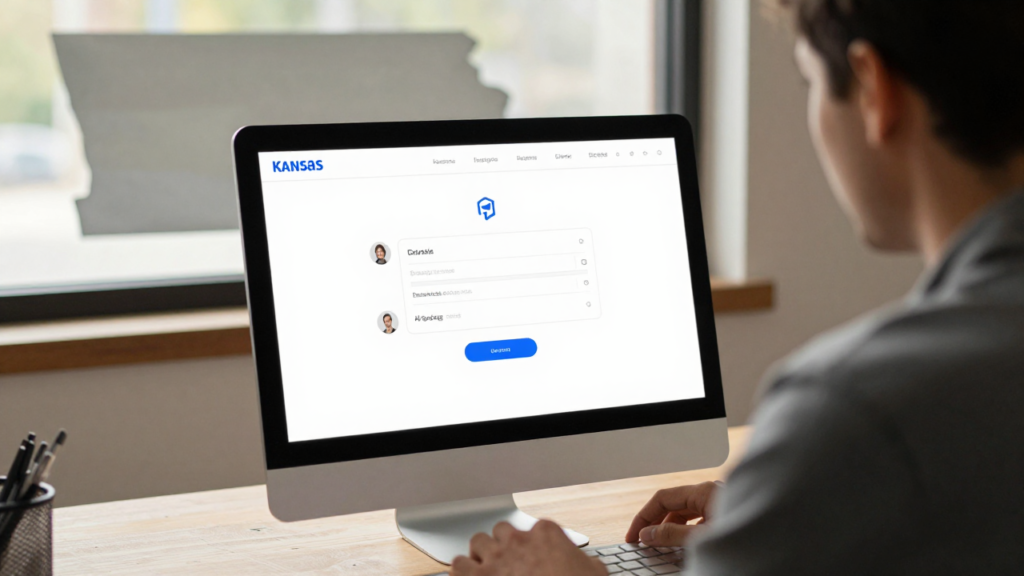
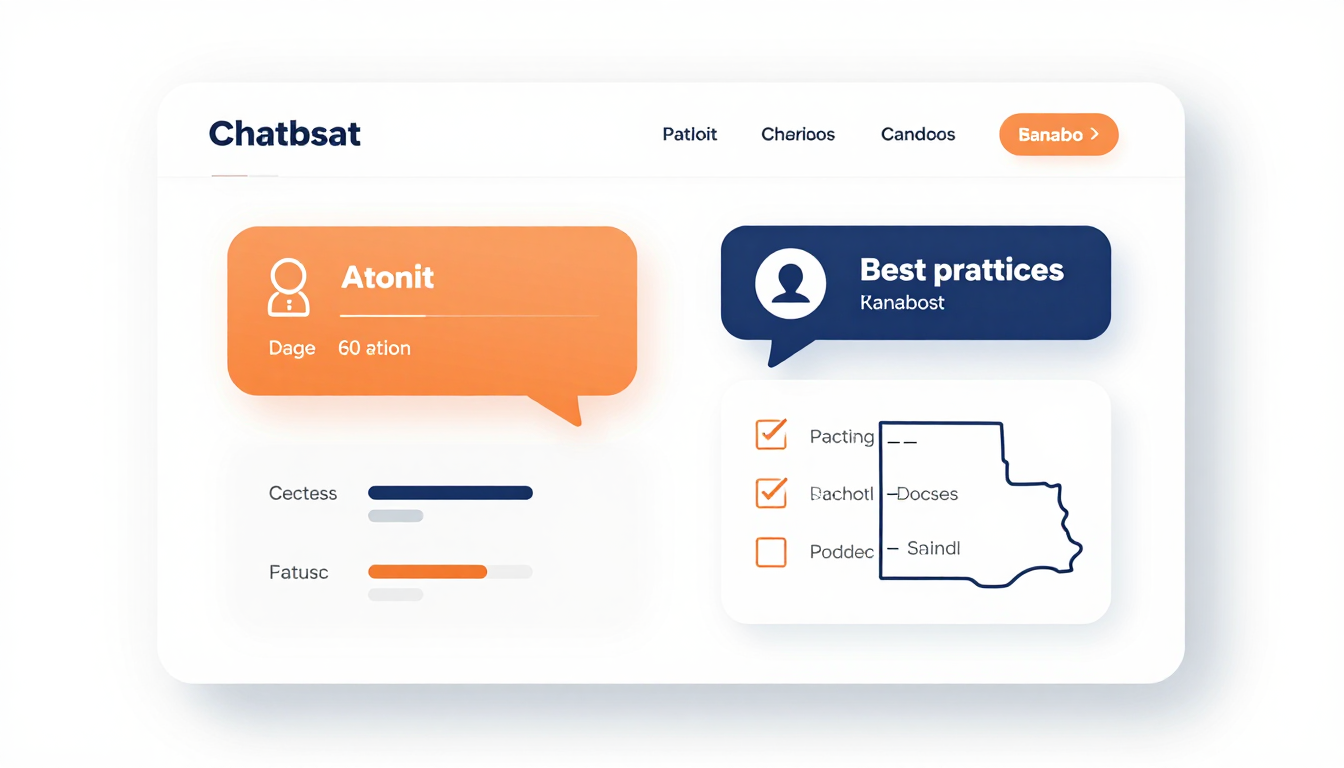
Your website gets a visitor. They have a question. They do not want to wait on hold, dig through a FAQ page, or fill out a form they are not sure anyone reads. They want an answer now. That is the job of a website chatbot. But here is what Kansas businesses are learning in 2026: a chatbot that gives weak answers is worse than no chatbot at all. A weak answer does not just fail to convert. It actively pushes people toward your competitor.
What Kansas AI Website Chatbots Actually Do for Your Business
An AI chatbot on your website does one thing above all else: it removes the wait. It answers the question a visitor has at the exact moment they have it. That sounds simple. It is not simple to do well.
The best Kansas AI website chatbots in 2026 operate on a spectrum. At one end, there are rule-based bots that follow a branching decision tree. At the other end, there are large language model-powered bots that read context, interpret intent, and generate responses in natural language. Between those two poles is a wide range of hybrid approaches. For a Kansas small business, the right choice usually sits somewhere in the middle. A pure rule-based bot breaks when a visitor asks something outside the script. A pure LLM bot can hallucinate details about your services in ways that create legal or reputational risk. A well-configured hybrid uses LLM capabilities for understanding and routing, but grounds the responses in curated knowledge about your actual business.
The National Institute of Standards and Technology (NIST) covers responsible AI deployment in business contexts, including how organizations should monitor and maintain AI systems. That guidance applies directly to how Kansas businesses should approach chatbot governance and accuracy tracking.
The Lead Qualification Problem Every Kansas Chatbot Solves (If Set Up Right)
The single biggest conversion killer on a service business website is the gap between a visitor’s question and their ability to find an answer. When that gap exists, the visitor leaves. They do not call. They do not fill out the contact form. They find a competitor who answered the question faster.
A properly configured AI chatbot bridges that gap. When a visitor lands on your page and asks “Do you handle LLC formation in Kansas?”, the chatbot answers immediately. It qualifies the lead. It collects the contact information. It schedules a follow-up. The whole loop closes in under two minutes, without your team being involved.
The problem is that “properly configured” is doing a lot of work in that sentence. A chatbot that is not trained on your specific services, pricing structure, and common questions will give answers that are technically true but practically useless. “Yes, we handle LLC formation” is not the same as “Yes, we handle Kansas LLC formation, the process takes three to five business days, the state filing fee is included in our flat rate, and here is a calendar link to schedule a call this week.” The specificity is the conversion.
The U.S. Chamber of Commerce report on small business technology adoption confirms that businesses implementing AI-powered communication tools report faster lead response times and higher customer satisfaction than those relying on static contact forms. Forbes Advisor research on AI chatbots further confirms that the primary driver of chatbot ROI is response accuracy, not feature complexity.
How to Spot a Weak Chatbot Before It Costs You Leads
Weak chatbots have recognizable failure patterns. If you recognize these on your own site or a competitor’s, you know the bot is not pulling its weight.
The first failure mode is vague responses. A visitor asks a specific question. The bot responds with something like “Our team can help with that! Contact us at [email] or fill out the form below.” This is not a chatbot. This is a redirection device dressed up as a bot. It answers nothing. It adds friction instead of removing it.
The second failure mode is confident wrong answers. This is the LLM hallucination problem. A visitor asks whether Kansas requires a registered agent in every county. The bot says yes, when the answer is that a registered agent must have a physical address in Kansas but that address does not need to be in every county. The visitor acts on that wrong information. Your team has to clean up the confusion later.
The third failure mode is a bot that cannot hand off. The visitor asks something complex, or something the bot cannot answer, and the bot either loops back to the same options or simply disappears. The visitor is left mid-conversation with no resolution.
The fourth failure mode is a bot that was clearly built for someone else’s business. Generic chatbot setups that repeat generic SaaS language are obvious to visitors. A Kansas business visitor can tell within two sentences whether the bot knows what the business actually does. If it does not, they leave.
The Harvard Business Review analysis of AI chatbot trust factors found that the single most important driver of whether a chatbot builds or destroys customer trust is the accuracy of its first substantive response.
Kansas Website Chatbot Setup: What Needs to Be True From Day One
Setting up a chatbot for a Kansas service business is not a one-and-done task. But the foundation matters more than the ongoing tweaking. Three things have to be in place before you launch.
Your chatbot needs to know your business. Not your industry. Your specific business. The services you offer, the states you serve, your pricing structure, your common objections, and your process for new client intake. If your team cannot answer a question in under thirty seconds, the chatbot should not be answering it either — or it should be routing to a human who can, immediately.
Your chatbot needs a clear escalation path. Not every conversation should end with the bot. Complex questions, unhappy visitors, and high-value prospects should reach a human quickly. A chatbot that never hands off is a chatbot that is protecting itself, not your business. The FTC’s guidance on AI business tools specifically notes that businesses are responsible for the outputs their AI systems produce — which means a chatbot that gives inaccurate information about your services is a compliance risk, not just a UX problem.
Your chatbot needs feedback. Set up a way to know when the bot gives a bad answer. If a visitor marks a response as unhelpful, or if they abandon the chat mid-conversation, your team needs to know. A chatbot that learns from its failures gets better. A chatbot that does not know it is failing does not.
The Kansas AI Website Chatbot Conversation That Actually Converts
Conversion through a chatbot is not about being clever. It is about being helpful at the exact right moment. Here is what that looks like.
A visitor lands on your registered agent services page from a Google search for “Kansas registered agent.” They have a specific question: “How much does a Kansas registered agent cost per year?” The chatbot responds immediately: “Our Kansas registered agent service is $49 per year, covers all 50 states, and includes same-day document forwarding. The Kansas Secretary of State filing fee is separate and starts at $90 for articles of organization. Would you like to see our full pricing, or should I schedule a 10-minute call with our team?”
That response answers the question, sets expectations, and offers a next step. It qualifies the visitor — they are price-shopping, which means they are in decision mode. The chatbot gave them enough to stay engaged without so much detail that they feel they do not need to talk to anyone.
The weak version of that same exchange: “Great question! Our registered agent service helps keep your business compliant. Please visit our pricing page or contact our team for a custom quote.” The visitor is already looking at three other tabs. They click away.
Related Reading
AI Website Chatbots for Registered Agent Leads in 2026 — How AI chatbots help service businesses qualify leads and reduce follow-up time.
Oregon AI Chat Intake in 2026 — How home-service LLCs use AI intake to screen leads without slow replies.
Vermont AI Intake Forms in 2026 — How service businesses qualify leads faster with AI-powered intake forms.
Frequently Asked Questions
Does a chatbot actually increase conversions on a Kansas business website?
Yes, when it is configured well. Research consistently shows that website visitors who engage with a chatbot are significantly more likely to submit a contact form, schedule a call, or complete a purchase than visitors who do not interact with one. The key phrase is “configured well.” A generic bot that does not know your business will not convert. A bot trained on your specific services, pricing, and FAQs can become one of your highest-performing sales tools.
How do I know if my Kansas chatbot is giving wrong answers?
The most reliable signal is visitor feedback and behavior. If visitors frequently abandon the chat, mark responses as unhelpful, or ask to speak to a person, the bot is failing. Set up a regular review process — weekly at first, monthly once the bot stabilizes — where someone on your team reads through chat transcripts and flags incorrect or vague responses. Correct the knowledge base and re-train the bot on those specific questions.
Should my Kansas chatbot try to close the sale or just qualify the lead?
For most service businesses, the chatbot’s job is lead qualification, not closing. Your chatbot should identify that a visitor has a real need, collect their contact information, and book a next step — a call, a discovery form, a quote request. Trying to close through a chatbot for a complex service usually creates a worse experience than routing to a human at the right moment.
Can a chatbot handle questions about specific Kansas business requirements?
Yes, if it is trained on Kansas-specific information. A chatbot powered by a current knowledge base that includes Kansas LLC formation requirements, Kansas registered agent rules, and Kansas annual report obligations can answer specific state-level questions accurately. Without that Kansas-specific grounding, the bot will give generic answers that do not help Kansas visitors.
What is the biggest mistake Kansas businesses make with AI website chatbots?
Setting up the chatbot and forgetting it. A chatbot is not a set-it-and-forget-it tool. It requires ongoing training, regular review of failing conversations, and updates whenever your services, pricing, or state requirements change. A chatbot trained on outdated information is worse than no chatbot — it gives visitors false confidence in answers that may no longer be accurate.
Kansas Business AI Tools
Your Kansas Website Deserves Better Than a Broken Chatbot.
A chatbot that cannot answer your visitors’ questions is worse than no chatbot at all. Kansas AI website chatbots built the right way qualify leads, reduce follow-up time, and support your team without creating confusion. Rapid Registered Agent helps Kansas businesses build chatbot workflows that actually convert.
- All 50 States
- Supported
- Registered Agent Included
- Yes
- Online LLC Filing
- Same Day