Arkansas Review Reply SOPs in 2026: How Small Service Brands Stay Fast and On-Message
Arkansas review reply SOPs in 2026 are the workflows that small service brands use to respond to customer feedback quickly and on-brand. If you run a service business in Arkansas, your online reputation lives or dies by how you reply to reviews. A thoughtful response to a negative review can win back a customer. A fast, warm reply to a positive review can turn one review into a referral. Ignoring reviews — or responding without a plan — can damage the brand you spent years building. This guide walks through the review reply process that keeps small Arkansas service brands fast, consistent, and on-message.
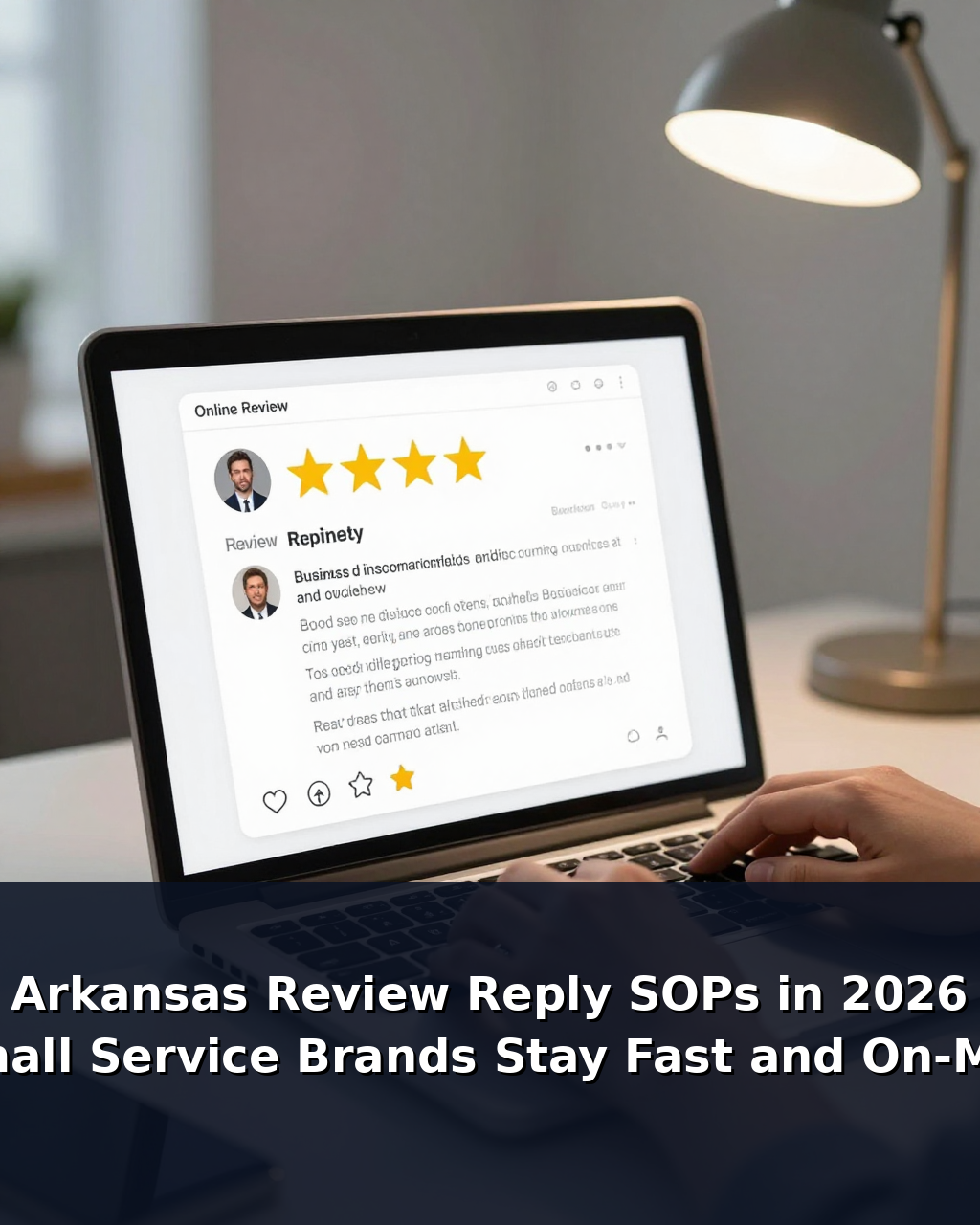
The first thing to understand about review reply SOPs in Arkansas is that they are not about fake praise or scripted deflections. They are about having a clear plan before the review lands so you do not have to think on your feet. When a customer takes the time to leave feedback — positive or negative — they are giving you information you can use. A good SOP makes sure you capture that information and respond in a way that reflects your brand values every single time, not just when you happen to have bandwidth.
Why Your Review Response Process Matters More Than the Review Itself
Most small service brands spend energy worrying about what customers say in their reviews. The brands that stand out spend that energy on how they respond. Google Business Profile and Facebook reviews are public. Every potential customer who is deciding whether to hire you or buy from you reads your responses. A generic “Thank you for your feedback” response tells people nothing about who you are. A specific, warm, on-brand reply tells people that you care about every single customer interaction. That distinction converts browsers into leads.
For Arkansas businesses, this is especially important. Local service markets are relationship-driven. Word of mouth travels fast in cities like Little Rock, Fayetteville, and Bentonville. A single thoughtful review reply can be the reason a new customer chooses you over a competitor. A dismissive or defensive reply can ripple through your local reputation in ways that take months to repair. Having a written SOP for review responses removes the emotional reaction and replaces it with a consistent process that protects your brand.
The review reply process also feeds your internal improvement loop. Every review — positive or negative — is data. Negative reviews tell you where your service delivery has gaps. Positive reviews tell you what is working so well that customers spontaneously mention it. Your review reply SOP should include a step for logging patterns over time so your team can spot recurring praise and recurring complaints without having to read every individual review manually.
The Core Components of a Review Reply SOP
A solid review reply SOP has five moving parts. The first is response time. Aim to reply to every review within 24 to 48 hours. Faster is better, but accuracy beats speed. A thoughtful reply sent at 46 hours is more valuable than a rushed non-reply sent at 6 hours. Set a daily or twice-daily calendar block to check your review channels so nothing sits unreplied for more than two business days.
The second component is tone alignment. Every person on your team who has access to your review accounts needs to understand your brand voice. If your brand is warm and friendly, your replies should be warm and friendly. If your brand is professional and formal, your replies should match that. Mixing tones across replies — one reply casual, the next stiff — makes your brand feel untrustworthy. Write two or three sample replies for each common review scenario and keep them in a shared document your team can reference.
The third component is negative review handling. When a negative review arrives, the SOP should require a calm, non-defensive acknowledgement before anything else. Thank the reviewer for bringing the issue to your attention. Apologize for the specific experience they described. Offer to take the conversation offline to resolve it. This pattern — thank, apologize, offer to resolve — is the backbone of good negative review handling for service brands. It shows future customers that you take feedback seriously without escalating the public dispute.
According to the Harvard Business Review, businesses that respond to negative reviews see a median rating increase of up to 0.42 stars over time. That improvement comes not from the product getting better but from the response process showing prospective customers that you care. The data makes the case: responding matters as much as the service itself.
The fourth component is positive review amplification. When a customer leaves a five-star review that mentions something specific — your punctuality, your communication, the quality of your work — ask them to share that experience elsewhere. A gentle “We would love to see your review on Google too” in your reply gives them permission without feeling pushy. This turns one review into two, which compounds your local search visibility over time.
The fifth component is internal tagging and reporting. Your review reply SOP should include a system for tagging each review by category — product quality, staff behavior, pricing, wait times — so you can report trends monthly. If you are seeing the same complaint about scheduling show up across three consecutive negative reviews, that is a signal worth escalating internally. Your SOP should name who receives that escalation and how quickly it needs to happen.
Building the Workflow Step by Step
Step one of the review reply SOP is monitoring. You cannot respond to reviews you do not know exist. Claim and verify your Google Business Profile, Facebook page, Yelp listing, and any industry-specific review site relevant to your service. Set up email notifications or use a review management tool that aggregates reviews from multiple platforms into a single dashboard. For most small Arkansas service brands, a shared spreadsheet that logs new reviews with their platform and date works fine to start.
Step two is triage. When a new review comes in, classify it immediately. Is it positive, neutral, or negative? Does it contain specific factual claims that need internal follow-up? Does it mention a staff member by name who deserves recognition? A 30-second triage on each review determines the response path. Positive reviews follow the warm reply path. Negative reviews follow the acknowledge-and-offer path. Neutral reviews get a simple thank you with a gentle ask for specifics if they did not leave any.
Step three is drafting the reply. Keep it short — two to four sentences is the sweet spot. Address the reviewer by name if they used one. Reference the specific thing they mentioned rather than giving a generic response. If they mentioned your team by name, include that name in your reply so it feels personal. If they complained about timing, acknowledge the timing issue and mention what you are doing to prevent it going forward.
Step four is review and posting. If you have more than one person on your team, the SOP should specify who approves replies before they go live. A quick second pair of eyes catches tone problems before they become public. For solo operators, a five-minute pause between drafting and posting helps you read the reply as a customer would rather than as the person who just wrote it.
Step five is logging and escalating. After posting the reply, tag the review in your tracking system with the relevant categories and note any specific promises made in the reply — like a callback or a credit. If you promised something in the public reply, your team needs to know about it and follow through. Failing to follow through on a public commitment is worse than not replying at all.
Common Mistakes and How Your SOP Prevents Them
The most common mistake small service brands make with review replies is the defensive response. When someone criticizes your work, the instinct is to explain why the criticism is wrong. That instinct destroys your reputation. A prospective customer reading a back-and-forth between you and an unhappy reviewer learns one thing clearly: you do not take responsibility. Even if the customer was wrong about everything, your reply should be gracious. The goal is to show future customers that you are someone worth hiring, not someone worth avoiding.
Another common mistake is using the same reply for every positive review. Customers can tell when they are getting a form letter. “Thank you for your positive feedback!” feels hollow when it appears on ten different reviews on the same day. Personalize each reply by referencing the specific experience they described. If they said “the team was incredibly patient with my questions,” your reply should mention patience. That specificity signals to every reader that you actually read the review.
A third mistake is letting negative reviews sit without replies for days or weeks. An unreplied negative review tells every future browser that you do not engage with your customers. Even a simple “We are sorry to hear this and would like to make it right — please call us at [number]” posted two days after the review is better than silence. It shows effort and accountability.
For more on protecting your Arkansas service brand’s reputation, see our guide to Arkansas compliance news in late 2026 which covers the state notices that can also affect how you manage your business identity and online presence.
Using Templates Without Losing the Human Feel
One of the concerns small brands raise about SOPs is that they make everything feel robotic. The opposite is true when templates are used correctly. Think of templates as the skeleton — the structure that ensures you cover the right elements every time — rather than the body itself. The words around the skeleton are what make the reply feel human.
A good template structure looks like this: greeting plus customer name, specific reference to what they said, brand personality element, and next step if applicable. That structure stays consistent so nothing important gets missed. The specific words change based on what the customer actually wrote. This approach gives you speed without sacrificing authenticity.
For example, a positive review template starts with the customer’s first name, references their specific comment, adds a warm brand-specific line, and closes with an invitation to return or refer. That template, filled in correctly, takes under three minutes to post. The customer feels seen. The prospective customer reading it feels confident. Your brand stays consistent.
A negative review template starts with an apology for their specific experience, an acknowledgement of the specific issue, an offer to make it right offline, and contact information. That structure is consistent. The specifics change based on what went wrong. The tone stays calm and constructive. This is not robotic — it is professional.
Review Reply SOPs and Your Team
If you have multiple people on your team, the SOP needs to specify who owns which platforms and what approval process applies. For most small Arkansas service brands, one person is the primary review owner — the one who monitors, drafts, and posts replies. A second person reviews anything that touches on unresolved service failures or potential legal issues. This separation of duties keeps responses fast without creating bottlenecks.
Document your SOP in a shared location — a Google Doc, a Notion page, or even a well-organized shared folder. New team members should be able to read the SOP and start responding to reviews correctly within one sitting. The goal is not to create bureaucracy around something simple. The goal is to make sure that when you are busy and distracted, the default response is still a good one.
Role play negative review scenarios during team meetings. Have one person play the upset customer, another draft the reply on the spot, and the team evaluate the response together. This practice builds the muscle memory that makes real-time replies fast and on-brand when they matter most.
Measuring Whether Your SOP Is Working
Track three numbers to know if your review reply SOP is working. First, average response time. If you are consistently replying within 24 hours, your monitoring process is solid. If response times are creeping to 72 hours or more, you need to add more monitoring checks or automate notifications.
Second, rating trend. If your overall Google star rating is going up over six months, your service delivery and your review responses are both working. If your rating is flat or declining despite positive responses, the issue is likely in your service delivery rather than your review process. The SOP can surface the problem faster so you can fix what actually needs fixing.
Third, reply completion rate. Are you replying to every single review — positive, neutral, and negative? If you are at 100%, your SOP is built into your workflow. If you are at 70%, find the 30% you are missing and add monitoring to catch those platforms or time periods. Future customers notice gaps in replies, and those gaps count against you in decision-making moments.
Frequently Asked Questions
How quickly should I reply to a negative review?
Aim to reply within 24 to 48 hours. Speed matters, but accuracy and tone matter more. A calm, specific reply at 48 hours is better than a defensive reply at 6 hours.
Should I respond to every positive review or just the best ones?
Respond to every positive review. Even a short, specific thank-you takes 60 seconds and signals to every future reader that you appreciate your customers.
What should I never say in a review reply?
Never blame the customer, never be defensive, and never promise something in a public reply that your team cannot deliver. Never argue or continue a dispute in a public forum.
How do I handle a fake or unfair negative review?
First, respond calmly in public acknowledging the experience described. Then, use the platform’s reporting process to flag the review if it violates terms of service. Document your side internally.
Should my review reply SOP include social media mentions?
Yes, if your brand receives reviews or mentions on social platforms. Add those channels to your monitoring and SOP so nothing slips through unanswered.
Aim to reply within 24 to 48 hours. Speed matters, but accuracy and tone matter more. A calm, specific reply at 48 hours is better than a defensive reply at 6 hours.
Should I respond to every positive review or just the best ones?
Respond to every positive review. Even a short, specific thank-you takes 60 seconds and signals to every future reader that you appreciate your customers.
What should I never say in a review reply?
Never blame the customer, never be defensive, and never promise something in a public reply that your team cannot deliver. Never argue or continue a dispute in a public forum.
How do I handle a fake or unfair negative review?
First, respond calmly in public acknowledging the experience described. Then, use the platform’s reporting process to flag the review if it violates terms of service. Document your side internally.
Should my review reply SOP include social media mentions?
Yes, if your brand receives reviews or mentions on social platforms. Add those channels to your monitoring and SOP so nothing slips through unanswered.
Arkansas review reply SOPs in 2026 give your small service brand the structure to protect your reputation without spending all day on review management. A clear process means every customer who takes the time to leave feedback gets a response that reflects who you are. That consistency is what builds trust over time.
Aggressive Representation. Proven Results.
Your Reputation Deserves a Real Process
Rapid Registered Agent helps Arkansas small businesses stay on top of their online presence so nothing slips through the cracks. A professional review reply process is part of running a trusted service brand.
- Arkansas Businesses Served
- 14,000+
- Review Monitoring
- Included
- Response Templates
- Ready to Use