South Carolina Cleanup Bookkeeping in 2026: How to Fix Old Transactions Before Renewal Season
South Carolina Cleanup Bookkeeping in 2026 starts with a simple question. When is the last time you actually looked at your transaction history? Most South Carolina LLC owners reconcile their bank account. Some even run a monthly P&L. Very few go back through old transactions and clean up the mess that accumulates over a year.
Cleanup bookkeeping means fixing errors, categorizing misclassified expenses, and reconciling accounts that have drifted. It sounds tedious. It is. But it is also the difference between smooth tax season and a frantic scramble in April. Fall is the right time to do it, before you are buried in receipts and W-2s.
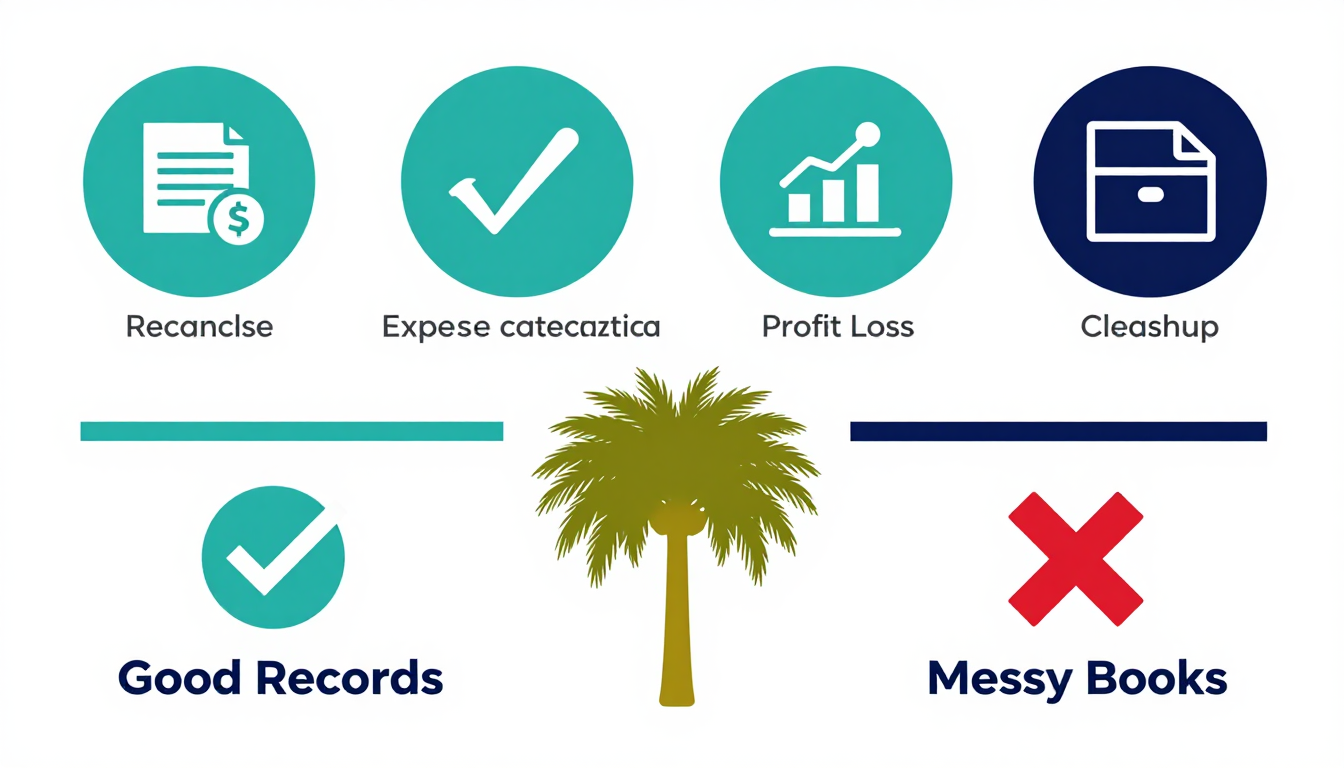
The South Carolina Department of Revenue administers state business taxes for LLCs and sole proprietors. Clean books mean fewer questions when you file. Dirty books mean your return takes longer and your accountant charges more.
Why Cleanup Bookkeeping Matters More Than You Think
Most small business owners think bookkeeping means recording transactions. It does. But it also means keeping those records clean enough that you can actually use them. A P&L statement full of misclassified expenses tells you nothing about your real profit.
South Carolina LLC owners who clean up their books before tax season make better decisions year-round. You know which clients are profitable. You know which expenses are worth cutting. You go into January with confidence instead of dread.
The other reason cleanup matters: if you ever get audited, clean books are your defense. Messy books invite scrutiny. The South Carolina DOR and the IRS both know that disorganized records often hide missed filings and underpayments. Clean up your transaction history now and sleep easier.
The Three-Step Cleanup Process
Cleanup bookkeeping does not have to take weeks. Break it into three steps and work through them in order. Each step builds on the last.
Step One: Pull All Accounts Together
Gather bank statements, credit card statements, and any loan statements for your South Carolina LLC. Go back at least 12 months. You need the full picture of every dollar that moved in and out of your business accounts.
If you use accounting software, run a balance sheet report for the full year. If you are on a spreadsheet, now is the time to build one. Either way, you need to see every account on one screen.
Step Two: Find the Errors
Look for four common mistakes in your transaction history.
First, duplicate transactions. Did you record the same deposit or expense twice? Delete the extra entry.
Second, misclassified expenses. A coffee meeting with a client is a business meal. A personal charge that slipped through is not. If you find personal expenses mixed in, reclassify them to the owner draw account and move on.
Third, uncategorized transactions. Every entry needs a category. If you see ” Uncategorized” on more than a handful of entries, sort them out.
Fourth, timing errors. Did you record an expense in the wrong month? Fix the date. Matching income to the month it was earned matters for accurate financial reporting.
Step Three: Reconcile Every Account
Reconciliation means matching your accounting records to your bank statements. Every account, every month, all the way back. If you skip months, errors hide and compound.
Your accounting software probably has a reconciliation feature. Use it. Mark each cleared transaction as reconciled. When you finish, your balance sheet should show zero discrepancies on every account.
Real Example: A Greenville Retail Shop Fixed Books in One Weekend
Marcus owns a gift shop in Greenville. He started his South Carolina LLC three years ago and kept books on a spreadsheet. By year two, the spreadsheet had 200+ uncategorized entries and several misclassified expenses.
He hired a bookkeeper for a Saturday. Together they went through two years of bank statements. They found twelve duplicate entries, forty uncategorized transactions, and three personal charges that had been expensed as business costs.
The cleanup took eight hours. His new balance sheet was clean. His tax preparer finished his return in two days instead of the usual two weeks. Marcus paid the bookkeeper $400 and saved over $600 in tax preparation fees.
Common Bookkeeping Mistakes South Carolina LLC Owners Make
Mixing personal and business transactions. Open a separate business account and use it only for business. Do not let personal charges sit in the business account and vice versa.
Recording income when you receive payment instead of when you earn it. If you send an invoice in December but get paid in January, record the income in December when you earned it. This matters for accurate year-end reporting.
Forgetting about asset depreciation. If your LLC bought equipment, furniture, or vehicles, those assets depreciate over time. Your books need to reflect that depreciation each year.
Not keeping receipts. South Carolina requires you to keep business records for at least three years. Digital copies are fine. Make sure every deduction has a corresponding receipt file.
Bookkeeping Tools That Make Cleanup Easier
You do not need expensive software to keep clean books. Free and low-cost options work well for most South Carolina LLCs.
Wave is a free accounting software option that handles invoicing, expense tracking, and bank reconciliation. It works for sole proprietors and small LLCs. The mobile app lets you photograph receipts on the job.
QuickBooks Online starts around $30 per month and handles more complex needs, including inventory and payroll. If your South Carolina LLC has employees or carries inventory, QuickBooks is worth the cost.
Whatever tool you use, commit to a monthly cleanup routine. Thirty minutes at the end of each month prevents a weekend-long nightmare at year-end.
When to Hire Help
Some South Carolina LLC owners should not clean up their own books. If your transaction volume is over 200 entries per month, if you have inventory, or if your LLC has multiple members, a professional bookkeeper is worth the cost.
Hourly bookkeepers in South Carolina typically charge $50 to $125 per hour. A full cleanup for a messy set of books usually runs $500 to $1,500. Compare that to the cost of an audit or a tax error that takes months to unravel.
Your accountant can also clean up your books before tax season, but they charge more per hour than a bookkeeper. It is cheaper to fix the mess before you hand the records over.
Frequently Asked Questions
What is cleanup bookkeeping for a South Carolina LLC?
Cleanup bookkeeping means going back through your transaction history, fixing errors, reconciling accounts, and categorizing misclassified expenses so your books are accurate and ready for tax season.
When should South Carolina LLC owners clean up their books?
Fall is the best time, before tax season gets busy in January through April. Doing it now means you go into the new year with clean books and no last-minute scrambles.
How do I find errors in my LLC bookkeeping?
Run a balance sheet and look for accounts with unexpected balances. Pull a transaction report and look for duplicates, uncategorized entries, and misclassified expenses. Reconcile every account to your bank statements.
Can I do bookkeeping cleanup myself or do I need a professional?
You can do it yourself if your transaction volume is low and your books are only mildly disorganized. If you have hundreds of uncategorized entries, multiple accounts, or employees, a professional bookkeeper will save you time and money.
What records does South Carolina require my LLC to keep?
South Carolina requires business records to be kept for at least three years. Keep bank statements, receipts, invoices, contracts, and payroll records. Digital copies are acceptable as long as they are legible and complete.
- South Carolina Compliance News in 2026 — Stay ahead of filing requirements this fall
- South Carolina DBA vs LLC Name in 2026 — Know your business name rules
- South Carolina First Employee Checklist in 2026 — What to do when you hire your first worker
Aggressive Representation. Proven Results.
Clean Books Mean Smooth Tax Season for Your South Carolina LLC
Rapid Registered Agent helps South Carolina LLC owners stay organized year-round. Clean up your books now and enter 2027 with confidence. Sign up in minutes and get the support you need.
- South Carolina LLCs Served
- Thousands
- Bookkeeping Tools
- Recommended and Supported
- Support
- South Carolina-Based Team