
Mississippi Loan-Ready Books in 2026: The Monthly Cleanup Habits That Make Lenders Less Nervous

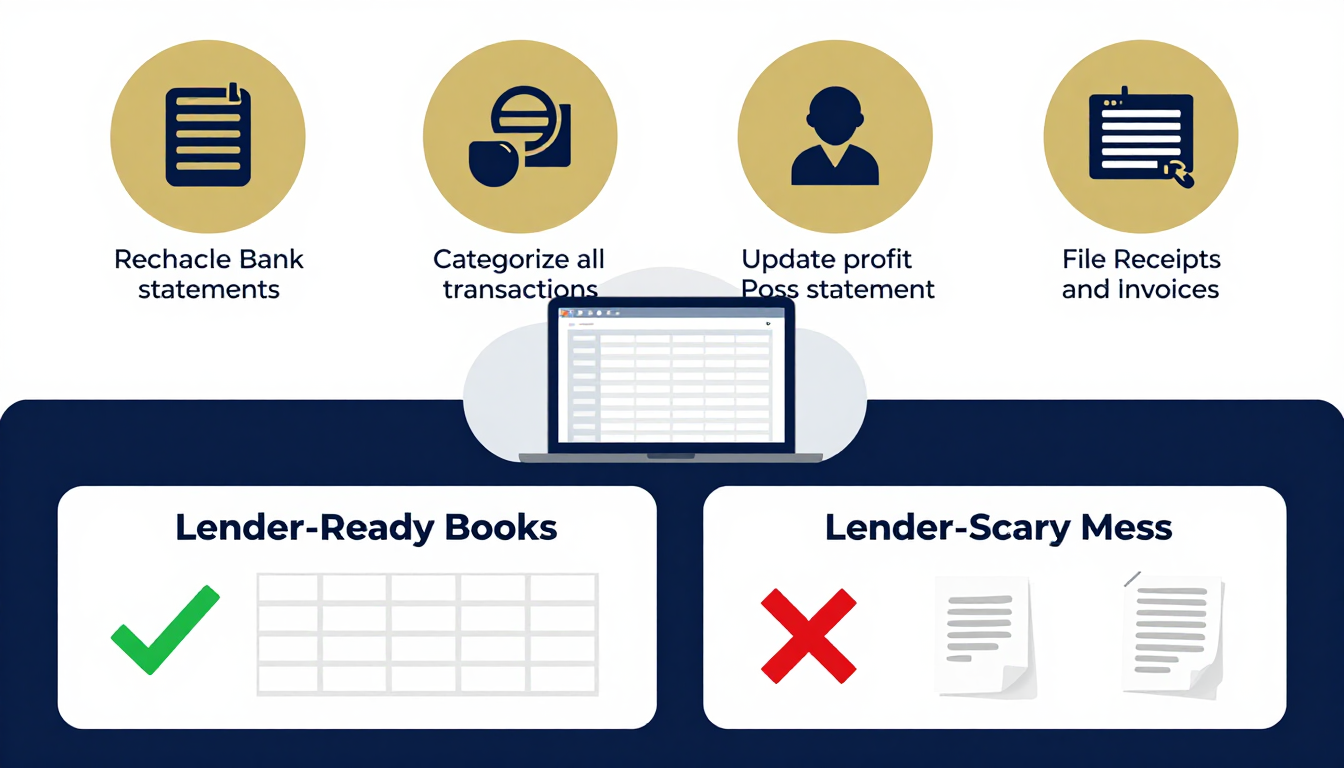
Mississippi Loan-Ready Books in 2026 start with one habit that most small business owners skip: cleaning up the books every single month. Lenders do not ask to see your bank statement and guess along with you. They ask to see your profit and loss statement, your balance sheet, and your tax returns — and they can tell within thirty seconds whether those documents were prepared carefully or thrown together the week before the application. This guide covers exactly what to clean up each month so that when you need a loan, your Mississippi LLC is ready to apply.
Why Monthly Bookkeeping Cleanup Makes Mississippi LLCs Loan-Ready
The reason most Mississippi small business owners cannot get a loan approved is not that their businesses are failing. It is that their books look like their businesses are failing, even when they are not. A lender reviewing a loan application is looking for consistency, accuracy, and the ability to repay. Those three things show up in the financial statements you submit. If your profit and loss statement has miscategorized expenses, missing deposits, and transactions that have been sitting uncategorized for three months, the lender assumes the rest of your records are that sloppy.
Monthly cleanup fixes this. When you reconcile your accounts and categorize every transaction once a month, your financial statements are accurate. Accurate financial statements tell a lender that you know where your money is going. That is the single most reassuring thing you can show a bank. It is more persuasive than revenue numbers alone.
For a Mississippi LLC, the monthly habit also catches errors before they compound. A transaction miscategorized in January is easy to fix. The same error left for twelve months becomes a bookkeeping project that requires pulling bank statements, reconstructing entries, and hoping you remember what actually happened. Lenders see the mess when it is still messy.
The Three Statements Every Mississippi Lender Wants to See
Before you apply for any loan — SBA, bank term loan, line of credit, or equipment financing — you need three financial statements ready to go. These are the documents that determine whether your application moves forward or gets declined.
The profit and loss statement shows your revenue, your expenses, and your net income over a set period. Lenders typically want to see the last two years of P&L statements plus year-to-date figures. A business that earned $80,000 in 2024 and $95,000 in 2025 looks like a better bet than one that earned $200,000 in 2024 and $40,000 in 2025. Consistency matters as much as size.
The balance sheet shows what your Mississippi LLC owns, what it owes, and what the equity is at a specific point in time. Lenders want to see this because it tells them whether your business has accumulated value and whether your debt load is manageable.
The statement of cash flows reconciles your net income to your actual cash position. This is the statement most often missing from small business loan applications, and lenders notice its absence. You can show a profit on paper and still be short on cash.
All three statements should be prepared using the same accounting method — cash or accrual. Most small Mississippi LLCs use cash basis accounting because it is simpler and matches what is reported on the Schedule C tax return.
Mississippi Annual Compliance and How It Shows Up on Your Books
Your annual compliance filings appear on your financial statements, and lenders know what to look for.
The Mississippi Secretary of State requires every domestic LLC to file an annual report by April 15 each year. The filing is free for domestic LLCs. Foreign LLCs registered in Mississippi pay $250. If your LLC has missed this deadline, it is administratively dissolved, and that dissolution shows up when a lender pulls your good standing certificate. You cannot get a loan as a dissolved LLC. Under Miss. Code Ann. § 79-29-821, the Secretary of State gives you a 60-day cure window after the deadline, but that window is a countdown to dissolution, not a grace period.
Lenders pulling a certificate of good standing on your Mississippi LLC will see the current status of your entity. Before you apply for any financing, verify your Mississippi LLC status using the SOS business entity search. If your annual report is not filed, file it now.
Mississippi has a notable advantage — there is no state income tax. That means your Mississippi LLC is not juggling quarterly state estimated payments the way LLCs in Texas, Florida, or many other states do. This simplifies your cash flow and makes your profit and loss statement cleaner to read.
The Monthly Cleanup Checklist That Builds Loan-Ready Books
Here is what to do in the first week of every month. These tasks take two to three hours for a typical Mississippi small LLC with moderate transaction volume.
Reconcile every business bank account to the bank statement. Download the bank’s statement, compare every line item to your bookkeeping software, and note any transactions that do not match. Unreconciled accounts mean your balance sheet is wrong, which means the lender’s analysis of your business is wrong.
Categorize every transaction. Go through every deposit and expense in the past month and assign it to the correct category. Do not put everything in “miscellaneous” — lenders want to see where money actually goes.
Review your accounts payable and accounts receivable. A balance sheet with large receivables that are six months old tells a lender your customers do not pay on time.
Check your sales tax account. If your Mississippi LLC sells taxable goods or services and has a sales tax permit from the Mississippi Department of Revenue, verify that your collected sales tax matches what you have remitted.
Review your loan balances and credit card statements. Confirm that the balances on your books match the actual balances on your statements.
File or set aside documentation for the month. Receipts, invoices, and contracts should be organized by month and stored in a consistent location. The IRS recommends retaining business records for at least three years.
Bookkeeping Software Choices That Work for Mississippi Small LLCs
You do not need expensive software to keep loan-ready books. The tool matters less than the habit.
QuickBooks Online is the most widely recognized option and the one most bank loan officers have seen before. It connects directly to most business bank accounts, imports transactions automatically, and generates the P&L, balance sheet, and cash flow statement with a few clicks.
Wave is free for basic bookkeeping and invoicing. It works well for sole-proprietor Mississippi LLCs with no employees.
FreshBooks is designed for service businesses and is known for its clean interface and straightforward invoice creation.
Xero is a more robust option with stronger inventory and payroll features.
The most common mistake with bookkeeping software is entering transactions manually and then letting them sit uncategorized. Review and categorize imported transactions every week, not once a month.
What Lenders Actually Check When They Pull Your Books
Banks and SBA lenders run specific calculations, and they look for red flags that indicate your books are not reliable.
Debt service coverage ratio is one of the first numbers they calculate. This is your net operating income divided by your total debt service. Most banks want to see a DSCR of at least 1.25. If your P&L shows inconsistent net income, this ratio fluctuates, and lenders get nervous.
The debt-to-equity ratio compares what your business owes to what it owns. Lenders prefer to see your business building equity over time rather than carrying high leverage.
Age of receivables is a flag that catches many small business owners off guard. If your accounts receivable are aging past 60 days, lenders assume your customers do not pay reliably.
Bank statements for the last three to six months are always required. Lenders look for unexplained transfers, large unexplained deposits, and patterns that suggest the business is not generating consistent revenue.
Common Bookkeeping Mistakes That Sink Mississippi Loan Applications
Posting revenue when you send the invoice instead of when you receive the payment inflates your revenue on paper in months when you invoice heavily but have not yet collected. Use the cash method consistently — record revenue when the check actually arrives.
Mixing personal and business expenses is the mistake that most directly undermines your LLC liability protection. Co-mingling funds can cause a court to pierce the LLC veil, which means you lose the personal liability protection that the LLC was supposed to provide.
Not tracking depreciation on equipment and assets makes your balance sheet inaccurate over time. If your Mississippi LLC bought a vehicle, office equipment, or machinery, the value of those assets decreases each year through depreciation.
Failing to reconcile payroll tax withholdings catches many small LLCs with employees. The SBA advises small business owners to maintain payroll records for at least three years and reconcile those records quarterly with the filed Form 941.
Related reading
Mississippi annual report and registered agent guide
Mississippi compliance news 2026
Mississippi registered agent service
Frequently Asked Questions
What financial statements do I need for a small business loan in Mississippi?
Most lenders require a profit and loss statement for the last two years plus year-to-date, a current balance sheet, and a statement of cash flows.
How do I prepare my Mississippi LLC books for a loan application?
Reconcile your business bank accounts monthly, categorize every transaction, and keep your P&L and balance sheet current.
Does missing a Mississippi annual report affect a loan application?
Yes. If your LLC is not in good standing, lenders will decline the application.
What bookkeeping software works best for a Mississippi small LLC?
QuickBooks Online is the most widely recognized by bank lenders. The best software is the one you will use consistently every month.
How far back do I need to keep financial records for a loan application?
Lenders typically want two years of historical financial statements plus the current year-to-date.
Can a Mississippi LLC with no state income tax get a loan easier?
Clean books and consistent revenue matter more than the tax structure.
Mississippi Loan-Ready Books in 2026 are built one month at a time. The habits that make a lender say yes — reconciling accounts, categorizing transactions, keeping financial statements current — do not require a CPA. They require a calendar reminder and two hours a month. Clean books also protect your Mississippi LLC in an audit, during a contract negotiation, or when you need to demonstrate your business is legitimate to a vendor.
Mississippi LLC Lending
Get Your Mississippi LLC Loan-Ready This Month
Mississippi loan-ready books start with two hours of monthly cleanup. Rapid Registered Agent helps Mississippi small business owners keep their financial records current, their LLC in good standing, and their loan applications ready to submit.
- States Served
- 52
- Active Businesses
- 300,000+
- Years in Business
- 15+