North Carolina AI Compliance Calendar in 2026: How Small Teams Turn Annual Reports and Renewals Into One View

North Carolina AI Compliance Calendar in 2026 sounds like something only big corporations worry about. It is not. Every North Carolina LLC faces the same handful of deadlines every year. Annual report filings with the Secretary of State. Franchise tax returns with the North Carolina Department of Revenue. Registered agent acceptance renewals. Business address updates when the office moves. Most small teams handle these one at a time, in a panic, right before they are due. That works until it does not. One missed filing can cost more in reinstatement fees than years of proactive compliance ever would.
A compliance calendar that uses AI to track due dates is not a luxury for large companies with legal departments. It is the most practical tool a two-person LLC in Charlotte or a growing startup in the Research Triangle can set up. The cost is low. The time investment is two hours at the start of the year. The return is the peace of mind of knowing every deadline is accounted for.
An AI compliance calendar pulls every due date into one view. It sends reminders before the deadline arrives. It separates urgent from important. For a two-person LLC in Charlotte or a growing team in Raleigh, that one shift removes more stress than any other single change in how the business runs.
What an AI Compliance Calendar Actually Does for a North Carolina LLC
A compliance calendar is not just a shared spreadsheet with due dates in it. That is a list. An AI calendar reads the due dates, understands which ones have consequences, and surfaces them in the right order at the right time.
North Carolina LLCs have recurring obligations that fall into two buckets. The first bucket is state-level deadlines. The North Carolina Secretary of State requires an annual report for every LLC registered to do business in the state. The due date depends on the type of entity and the filing date. Most North Carolina LLCs file on a calendar-year basis, which means the annual report is due by the 15th day of the fourth month after the fiscal year ends — April 15 for most. The second bucket is federal and other state obligations. Employee new hire reporting. Quarterly estimated taxes. Registered agent acceptance letters that need to be renewed or updated.
An AI calendar connects to the sources of these deadlines and automatically populates a running list. The small team does not have to remember every date. The system remembers for them.
North Carolina Annual Report and Renewal Deadlines Small Teams Keep Missing
The North Carolina annual report is the filing that keeps an LLC in good standing with the state. If the annual report is not filed, the Secretary of State can administratively revoke the LLC. That means the business loses its liability protection overnight. The member is suddenly operating as a sole proprietorship without realizing it.
The North Carolina Secretary of State business registration division handles these filings through their online business entity search and filing portal. The annual report due date for most LLCs is April 15. The filing fee is modest, but the penalty for missing it is steep — a reinstatement fee plus potential loss of the business name. LLCs can file online through the Secretary of State website, and most filings are processed within a few business days.
The annual report asks for basic information: the principal office address, the registered agent name and address, the principal officers or managers, and any changes to the LLC members since the last filing. If nothing has changed, the filer confirms the existing information and submits. If something has changed, the filer updates it at the same time. Either way, the filing is due on time.
Franchise tax is another one that catches small teams off guard. North Carolina charges an annual franchise tax on LLCs that do business in the state. The rate applies to the net worth of the business or a flat minimum, whichever is greater. The franchise tax return is separate from the annual report. Missing it triggers penalties and interest that compound quickly.
Registered agent renewals are the third blind spot. The registered agent acceptance agreement is a standing appointment. If the registered agent changes or the agreement lapses, the LLC is technically without a proper agent for service of process. That is a compliance gap that creates personal liability for the members.
How to Build an AI Compliance Calendar for Your North Carolina LLC in 2026
Building the calendar starts with listing every recurring obligation the LLC has. That means every annual filing, every estimated tax payment, every license renewal, and every contractual deadline that involves a government or institutional counterparty.
The North Carolina Department of Revenue administers the franchise tax and several other state-level business taxes that do not appear on the Secretary of State filing calendar. LLCs that do not track these separately may find themselves facing a notice of deficiency from the NC DOR with no prior warning. The franchise tax is not filed with the annual report — it is a separate filing with a separate due date.
Once the list of obligations is built, the next step is getting those dates into a system that can read them and send reminders. There are AI-powered project management tools that connect to external data sources through their API. The AI pulls in filing due dates from the North Carolina Secretary of State business services portal. It connects to IRS estimated tax due dates. It reads the new hire reporting schedule for the North Carolina Department of Labor.
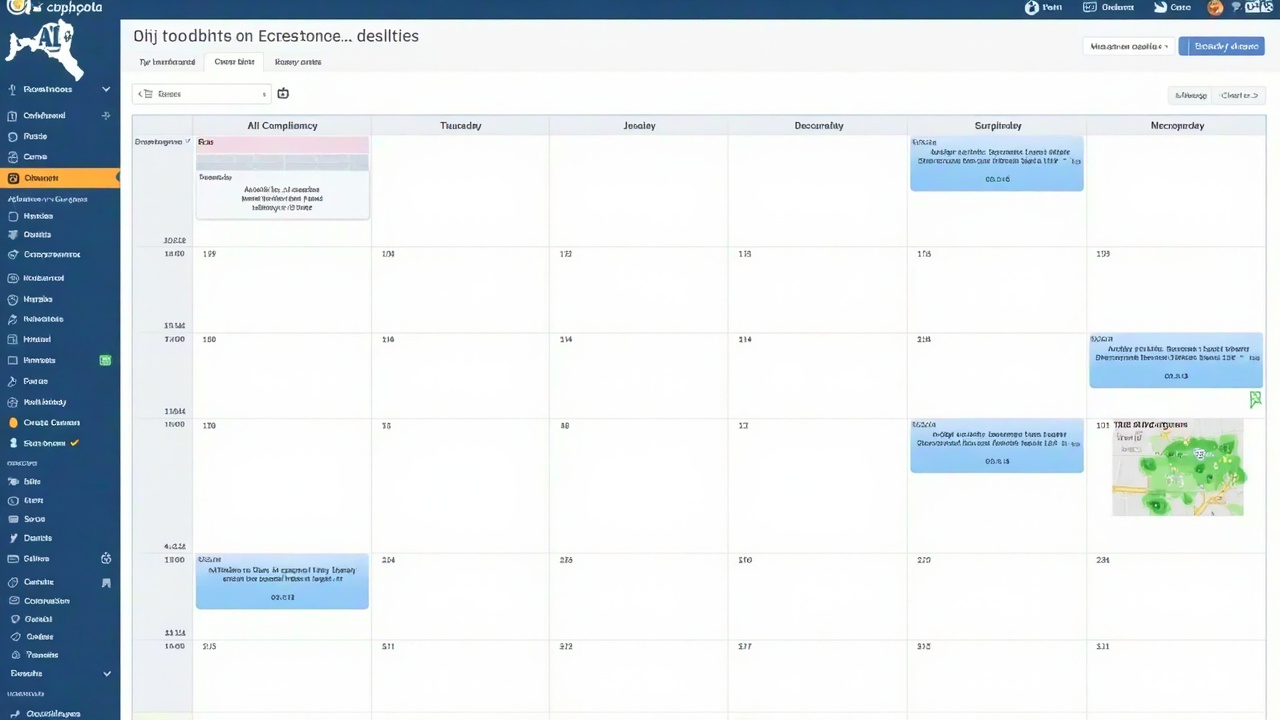
The system then creates a running calendar view that shows what is due this month, what is due this quarter, and what is coming up in the next six months. The AI flags anything that has not been confirmed or started. It escalates warnings when a deadline is fewer than 30 days away.
North Carolina State-Level Compliance Requirements That Belong on the Calendar
Beyond the annual report, North Carolina LLCs have state-level obligations that often get overlooked. The franchise tax is the most common one. The North Carolina Department of Revenue administers this tax, and it applies to most LLCs that are registered to do business in the state. The tax is based on either a flat minimum fee or the net worth of the LLC, whichever produces the higher amount. The return is filed annually and is due on the same schedule as the federal tax return for the business.
Business privilege licenses are another North Carolina requirement that varies by city and county. Many cities in North Carolina require a local business license to operate within their limits. Charlotte, Raleigh, and Greensboro each have their own licensing requirements and renewal schedules. An LLC that operates in multiple municipalities may need multiple licenses. An AI compliance calendar can track these if the due dates are entered at the beginning of the year.
Registered agent confirmation is a standing requirement. The registered agent appointment does not expire, but if the agent changes, the LLC must file a change of registered agent form with the Secretary of State. This is one of the most commonly missed administrative filings because it does not have a specific due date — it only has a trigger event. Setting a recurring annual reminder to confirm the registered agent information is current prevents the kind of surprise that happens when the agent changes first.
North Carolina also requires LLCs that are classified as partnerships for tax purposes to file a partnership return, even if the LLC has no tax liability. This is a federal filing handled through the IRS, but it is worth noting here because the penalty for non-filing applies even when no tax is owed. The IRS Partnership Filing requirements apply to North Carolina multi-member LLCs that have not elected to be treated as corporations.
Federal Compliance Touchstones That Belong on the Calendar
North Carolina LLCs with employees have federal new hire reporting obligations. The Small Business Job Protection Act requires every employer to report newly hired employees to the appropriate state agency within 20 days of the start date. In North Carolina, this reporting goes to the North Carolina New Hire Reporting Center, which is administered under the North Carolina Department of Health and Human Services. The penalty for failing to report is a $25 fine per employee for the first 90 days of non-compliance, with higher penalties for ongoing failures.
New hire reporting in North Carolina covers the employee name, address, and federal employer identification number, as well as the date the employment began. Employers can report online, by fax, or by mail. The online portal through the NC DHHS Division of Social Services is the fastest option and generates an immediate confirmation number.
North Carolina LLCs with multiple members may have annual filing requirements for federal partnership returns if the LLC is classified as a partnership for tax purposes. The IRS requires Form 1065 for partnerships. The due date is the 15th day of the fourth month following the tax year end — April 15 for calendar-year partnerships. Missing this filing does not just trigger penalties. It can trigger an automatic audit notice.
The IRS Publication 3402 covers LLC taxation in detail and is a useful reference for members who are not sure how their LLC is classified for federal tax purposes. Most multi-member North Carolina LLCs are classified as partnerships by default. Single-member LLCs are treated as sole proprietorships. Neither classification requires an election form to be filed unless the LLC wants to change its default status.
Turning Compliance From a Crisis Into a System
The teams that handle compliance best are not the ones with the most resources. They are the ones who built a system before they needed it.
A Charlotte-based construction LLC with three members learned this the hard way when the registered agent changed firms and nobody updated the LLC records in time. The state sent a notice to the old agent. The LLC missed the annual report deadline by six weeks. The reinstatement process took three months and cost more than the annual report fee would have ever been. The members spent that entire time worried about personal liability.
A smaller software consultancy in the Research Triangle had a different experience. The owner set up a compliance calendar in January and spent two hours mapping every filing date for the year. The calendar reminded the owner 60 days before each deadline. When April came, the annual report filing took 20 minutes online. The owner was done before coffee was finished.
A better approach is to map every recurring obligation at the start of each year. Put every due date on the AI calendar the day it is identified. Set the first reminder at 60 days out. Set the second reminder at 30 days. Set a final reminder at 7 days. By the time the deadline arrives, the work is already done or well underway.
North Carolina AI Compliance Calendar tools work best when they are set up at the beginning of the year, not in April when the annual report is already overdue. A January compliance review takes two hours. A May reinstatement takes three months.
Frequently Asked Questions
Do North Carolina LLCs have to file an annual report every year?
Yes. Every LLC registered to do business in North Carolina must file an annual report with the North Carolina Secretary of State. Most calendar-year LLCs have an April 15 filing deadline. The filing fee and required information are available through the Secretary of State business registration portal.
What happens if an LLC misses the North Carolina annual report deadline?
The Secretary of State can administratively revoke the LLC. That means the business loses its legal liability protection. The members become personally responsible for the debts and obligations of the business as if there were no LLC at all. Reinstatement is possible but requires paying all missed fees plus a reinstatement penalty.
How does an AI compliance calendar help a small LLC?
An AI compliance calendar connects to the sources of recurring deadlines and surfaces them in the right order at the right time. Instead of remembering every filing date, the small team gets automated reminders. This reduces the risk of missing a deadline and eliminates the stress of tracking everything manually.
What is the North Carolina franchise tax and who has to pay it?
North Carolina charges an annual franchise tax on LLCs and corporations doing business in the state. The tax is based on the net worth of the business or a minimum flat rate, whichever is greater. It is a separate filing from the annual report and has its own due date.
When should a North Carolina LLC set up its compliance calendar?
The best time is January 1. That is when the full year of due dates is known and the calendar can be built before any deadline is urgent. Even setting it up in February still catches most of the year’s deadlines before they become problems.
Can a registered agent help with North Carolina LLC compliance?
The registered agent receives legal documents and state notices on behalf of the LLC. Some registered agent services, including Rapid Registered Agent, also send compliance reminders for annual reports and franchise tax deadlines. That is not legal advice, but it is a practical way to stay on top of the calendar.
North Carolina LLC Compliance
North Carolina AI Compliance Calendar: One View, Zero Surprises.
North Carolina AI Compliance Calendar in 2026 helps small teams track annual reports, franchise tax, and registered agent renewals before they become problems. Rapid Registered Agent keeps NC LLCs in good standing.
- Annual Report Due
- April 15 (Most NC LLCs)
- Franchise Tax
- Annual — File Separately
- Registered Agent
- Standing — Update on Changes