North Dakota Cleanup Accounting in 2026: Fixing Old Transactions Before They Break Reports
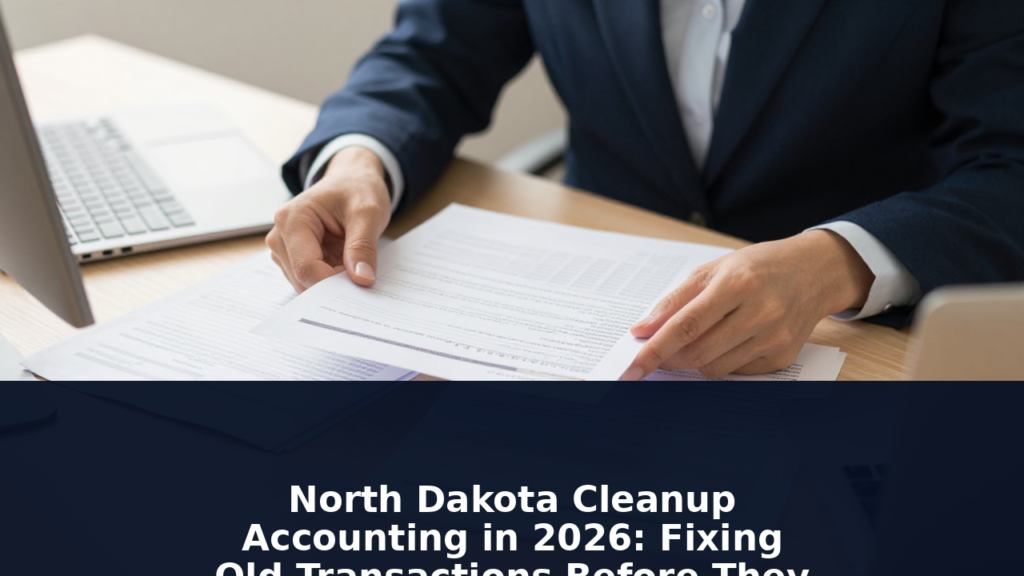
North Dakota cleanup accounting in 2026 starts with a simple question: when was the last time you actually trusted your books? Not just hoped they were right — knew they were right. If your answer is “I have no idea” or “it’s been a while,” you’re not alone. Most small business owners in North Dakota run their accounting software, pay their bills, and send invoices — but they don’t regularly clean up the old transactions sitting in the background, silently creating problems.
Cleanup accounting is the process of going back through your books, finding errors, fixing miscategorized transactions, reconciling old bank statements, and getting your financial records to the point where you can actually trust what they show. This guide walks through how to do it and why it matters more than most owners realize.

Why Old Transactions Cause Bigger Problems Than You Think
A miscategorized expense from 2024 doesn’t just sit there quietly. It flows into your tax return, your profit-and-loss statement, and your balance sheet. If you’ve been filing taxes with bad numbers, the IRS can reassess your return. If you’ve been making decisions based on bad reports, you’ve been making those decisions blind.
The problem compounds. An uncategorized transaction in January gets carried forward. By December, your profit-and-loss statement shows a distorted picture of what you actually earned and spent. When tax season comes, your CPA either spends hours untangling it or files based on what’s there — which means you pay more tax than you owe, or less, which triggers a flag.
For North Dakota small businesses, there’s an added consequence. Your annual franchise tax report to the Secretary of State requires accurate LLC financial information. If your books are a mess, you’re filing that report with bad data, which compounds the problem if you ever need to use those reports for a loan application, a commercial lease, or a potential buyer.
The Most Common Cleanup Accounting Problems in Small Business Books
Before you start cleaning up, it helps to know what you’re looking for. These are the problems that show up repeatedly in small business accounting, especially for service businesses in North Dakota.
Duplicate transactions. These happen more than owners realize — a payment entered twice in your accounting software, a bank deposit that got recorded twice, an expense charged twice by a vendor. Duplicate transactions inflate your expenses and understate your revenue, which distorts every financial metric you use to run your business.
Misclassified expenses. A business meal categorized as groceries. A vehicle repair categorized as office supplies. The IRS requires expenses to be categorized correctly, and misclassifications are one of the most common triggers for a bookkeeping audit. In North Dakota, the same rules apply — the state tax office expects reasonable categorization.
Old transactions with no category. These are transactions sitting in your accounting software with ” Uncategorized” or “Miscellaneous” as the category. They haven’t been assigned a home, which means your P&L is incomplete. If you’re looking at your year-end numbers and there are a dozen uncategorized items, you’re essentially filing taxes on an incomplete picture.
Incorrect bank reconciliations. A bank reconciliation compares your accounting records against your bank statement to make sure they match. If you’ve been skipping this step — which most small businesses do — there are likely discrepancies that have accumulated over months or years.
Sales tax collected but not remitted. This one is a real risk for North Dakota businesses that sell products or certain services subject to sales tax. If you’ve been collecting sales tax from customers but haven’t been remitting it to the state, that liability shows up on your balance sheet as a debt you owe. The longer it sits, the more interest and penalties accrue.
Owner draws mixed into expenses. For single-member LLCs in North Dakota, it’s common to see personal expenses paid from the business account and categorized as business expenses. This muddies everything — your tax return, your LLC’s financial records, and your liability protection.
How to Run a Cleanup Accounting Session: Step by Step
A cleanup accounting session is different from your regular bookkeeping. You’re not entering new transactions — you’re going backward through existing ones and fixing what’s wrong. Here’s how to run one.
Step one: Download your bank and credit card statements for the current year. Start with the current year and work backward only as far as you need to. If your books have been reasonably maintained for the past year, start there. If you’re significantly behind, consider going back two years — older than that and the IRS generally has a reduced ability to audit, though state tax records may differ.
Step two: Reconcile each month from the beginning of your accounting period. Most accounting software like QuickBooks or Wave can walk you through this. A reconciliation flags any transaction that appears in your bank statement but not in your books, or in your books but not in your bank. Go month by month and resolve every discrepancy.
Step three: Find and fix duplicates. Use your accounting software’s duplicate detection report, or sort your expense list by amount and date — duplicates often appear consecutively with identical amounts. Remove or merge them.
Step four: Reclassify uncategorized transactions. Go through every transaction without a category. Assign each one a correct category. If you don’t know what a transaction was for, dig into the receipt or contact the vendor before arbitrarily categorizing it.
Step five: Separate owner draws from business expenses. If you see personal expenses in your business account, reclassify them as owner distributions. This doesn’t make them deductible — it just accurately reflects that they are not business expenses.
Step six: Fix sales tax entries. If you’ve collected North Dakota sales tax from customers, verify that the amounts collected match what you’ve remitted to the state. If you collected but didn’t remit, contact the North Dakota Office of the Tax Commissioner to set up a payment plan before the liability grows further.
Using Your Clean Books to Make Better Decisions
Once your books are clean, they become a tool instead of a liability. A North Dakota service business with accurate books can look at its profit by service line, by client, and by month. It can see which jobs actually made money and which ones looked profitable but weren’t. It can apply for a commercial loan with confidence instead of hoping the numbers are close enough.
If you’re applying for a bank loan for equipment or expansion, lenders will pull your profit-and-loss statement and balance sheet. Dirty books mean a higher chance of denial or unfavorable terms. Clean books mean your actual financial picture — the one that shows you’re a good risk — is what the lender sees.
If you’re ever in a position to sell your North Dakota LLC, a buyer or their CPA will do due diligence on your financial records. If your books are a mess, the sale price gets adjusted downward or the deal falls apart. If your books are clean and show consistent revenue, you have something to negotiate with.
When to Hire a CPA for Cleanup Accounting
You can do a cleanup accounting session on your own if you’re comfortable with your accounting software and your books are only moderately messy. If you’re more than a year behind, or if your books have significant complications — multiple revenue streams, inventory, payroll, or state tax nexus issues — hire a CPA.
A CPA or fractional CFO can typically clean up two to three years of small business bookkeeping in one to three engagements, depending on the state of the records. The cost is usually worth it: the IRS penalties for a bookkeeping-related audit often far exceed the cost of having a professional clean up the records in the first place.
For North Dakota businesses, look for a CPA familiar with North Dakota state tax requirements in addition to federal tax law. State tax rules for LLCs, partnerships, and S-corps differ in some filing requirements from federal rules, and a North Dakota-licensed CPA will know what to look for.
Common Bookkeeping Mistakes That Require Cleanup
Running your own books as a small business owner is better than not having records at all — but it comes with predictable failure modes. These are the ones that show up most often in cleanup accounting engagements.
Recording income when received instead of when earned. If you’re using cash-basis accounting and recording income only when the check arrives, your books look different from your tax return, which can also be cash-basis. This creates a mismatch that complicates both filing and loan applications.
Paying personal expenses from the business account. This is the most common cleanup item for single-member LLC owners. The IRS requires a clear separation between personal and business finances for LLC liability protection to hold. Mixing them doesn’t automatically destroy your protection, but it weakens it significantly.
Not reconciling the business bank account. An unreconciled account means your books don’t match your bank. Every month you skip this, the discrepancy grows. This is also the step that catches fraud — if someone is skimming from your business account, reconciliation is how you find it.
Failing to track accounts payable and receivable. If you’ve been paying bills straight from your business checking account without recording what’s owed, or invoicing clients without tracking what’s outstanding, your balance sheet doesn’t reflect your actual financial position. Cleaning this up shows you how much money is actually available.
Keeping Books Clean Going Forward
After a cleanup, the goal is to not end up in the same situation again. A few habits keep books clean with minimal time investment.
Reconcile every bank account monthly — it takes thirty minutes and catches problems while they’re small. Review your profit-and-loss statement monthly and flag anything that looks wrong before year-end. Set up a separate business credit card for all business expenses — this dramatically reduces the personal-expense-mixing problem.
If you’re using QuickBooks, Wave, or FreshBooks, enable bank transaction downloads and set rules for common recurring transactions. Most accounting software can automatically categorize recurring expenses like rent, utilities, and software subscriptions. That leaves you reviewing only the transactions that don’t match a rule.
For North Dakota businesses, set a calendar reminder each November to complete your bookkeeping cleanup before year-end. Your North Dakota annual franchise tax report is due November 15 — having clean books by then means you’re filing accurately and on time.
Frequently Asked Questions
How much does it cost to hire a personal injury lawyer?
We work on a contingency fee basis. This means you do not pay any upfront costs or hourly fees. We only get paid if we successfully recover compensation for you, and our fee is a percentage of the settlement or verdict.
How long do I have to file a personal injury claim in Texas?
In Texas, the statute of limitations for most personal injury cases is two years from the date of the accident. However, certain exceptions apply depending on the specific circumstances. It is important to consult with an attorney as soon as possible to ensure your claim is filed within the legal deadlines.
What if I was partially at fault for the accident?
Texas follows a “modified comparative fault” rule. You can still recover damages as long as your share of the fault is not greater than 50%. Your compensation will simply be reduced by your percentage of fault. If you are found to be 51% or more responsible, you cannot recover damages.
Will my case have to go to trial?
Most personal injury cases are settled out of court through negotiations with the insurance company. However, if a fair settlement cannot be reached, we are fully prepared to take your case to trial to advocate for your rights in front of a judge and jury.
Aggressive Representation. Proven Results.
Need a North Dakota Registered Agent to Support Your LLC?
Rapid Registered Agent provides a registered agent in North Dakota and all 50 states, so your LLC stays in good standing and you can focus on running a business with clean, trustworthy financial records.